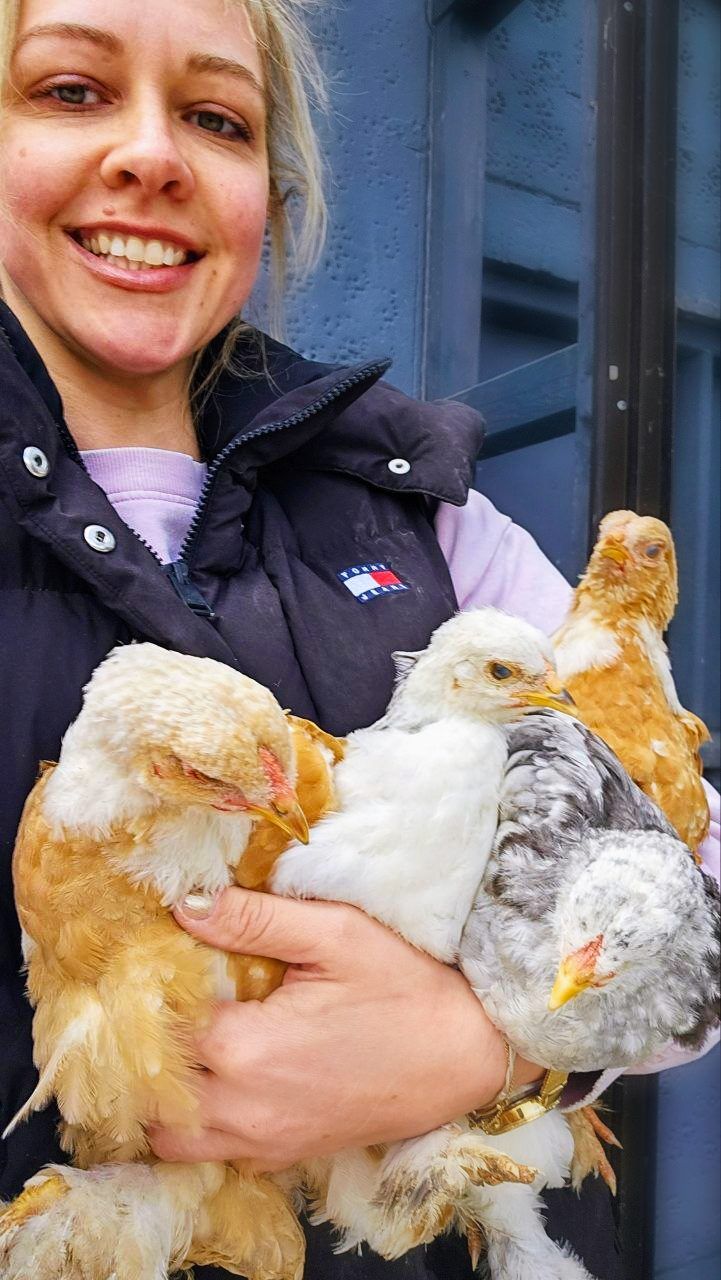
Who writes and maintains it
The site is written and maintained by Dr. Anne Rainville as part of the Wolfhoeve breeding programme. This website and its tools are constructed to answer the specific questions a breeder may have when planning a pen.
How this started
The project began as a way to understand and apply expert advice on chicken colour — specifically, which crosses were and were not sensible to attempt in the Wolfhoeve breeding programme — and grew into a public reference so that other breeders could work through the same questions.
Writing elsewhere
“De economie van chicken math” — Brahma Club Nederland, 2026. How the Wolfhoeve pens are organised into five genetic clans, why a colour project concentrates its genes before it backcrosses for type, and where the decisions became too many to hold in one head — which is what these tools were built to answer. In Dutch.
What the tools do
- Compare Standards puts two colour varieties side by side — their genotypes and standard descriptions — so you can see exactly which genes separate them.
- Breeding Outcomes works a cross out: it builds the Punnett square and the expected F1 and F2 genotype frequencies, handling sex-linked genes correctly. See the FAQ for what F1 and F2 mean.
Both are free, need no account, and are meant for learning and planning.
The photo identification tool
There is also an experimental photo identification tool: upload a picture and it suggests which colour varieties the bird lines up with, reading the visible plumage roughly the way a breeder’s first glance does. The photo is read by a vision-capable model (Anthropic’s Claude), and each version is measured against photographs of birds whose variety is already confirmed. It stays a first glance rather than a genetic test — it cannot see a bird’s hidden genes, and the breed standards and your own eye remain the final word.
Where the information comes from
The genetics reference draws on publicly accessible specialist resources and peer-reviewed literature:
- Colour descriptions and categorisation — informed by chicken-colors.info, which provides a comprehensive, publicly accessible reference to recognised chicken colours.
- Genotype associations — draw on and are checked against the established calculator reference at kippenjungle.nl.
- Gene identities — the molecular genes behind each trait are taken from the peer-reviewed genetics literature.1
Together, the two specialist sources map recognised colour phenotypes to associated genotypes. Using established methods of biological and economic modelling, Chicken Color Standards also works in the other direction: it combines individual genetic components into resulting genotypes and, when a known combination appears among calculated outcomes, connects it back to the recognised phenotype. That expert-reviewed genetics model — together with correction, structure, tool integration, and breeder judgement — is what this site contributes. Like any evolving model, it may still contain errors, edge cases, and areas for improvement.
See the Genetics Guide for the fuller scientific background, detailed references, and notes on areas where published sources disagree or evidence remains unsettled — areas where observations by chicken keepers and breeders can contribute to new understanding.
The limits of prediction
A breeding prediction is a probability, not a promise. The Breeding Outcomes tool tells you the expected proportions of each genotype — but a real hatch can look quite different from those numbers, for reasons worth understanding:
- Small numbers. Expected ratios only show themselves over many chicks. A single clutch is a handful of coin-flips, and small samples swing widely from the average.
- Modifiers and linked genes. Minor genes, incomplete penetrance and linkage can shift how a genotype actually looks, so two birds of the same genotype are not always identical.
- Selection still matters. A genotype tells you the genes; it does not tell you the quality. Breed type, feather quality and the fine detail that wins in the show pen come from a breeder's selection over generations, not from a calculator.
Contact
Corrections and questions are welcome — the aim is to be accurate first. You can reach the project through the Wolfhoeve site.
- Smyth, J. R., Jr. "Genetics of Plumage, Skin and Eye Pigmentation in Chickens." In Poultry Breeding and Genetics, edited by R. D. Crawford, 109–167. Amsterdam: Elsevier, 1990. The molecular identities of individual genes are cited on the relevant variety and gene pages; see, for example, the Genetics Guide references.