It's the cross, not the breed
The single most important thing to know: down sexing is a property of a particular cross set up in the right direction, not of a breed you can buy. It works because a father passes a Z chromosome to both his sons and daughters, while a mother passes hers only to her sons — so a sex-linked colour gene can be arranged to land on one sex and not the other. Reverse the same parents and it fails. Most ordinary chicks cannot be sexed by down at all.
Red sex-link: gold vs silver down
Cross a gold father over a silver mother. Because silver (S) is the dominant, sex-linked ground colour, it lands on the sons and not the daughters:
| Chick | Down colour |
|---|---|
| Pullets (♀) | Buff / reddish down — they inherit the father's gold. |
| Cockerels (♂) | Pale yellow / white down — the mother's silver shows. |
This is the "red sex-link" cross behind hybrids like the ISA Brown, Golden Comet and Red Star: reddish pullets, white cockerels, sortable at a glance. See the sex-linked genes page for the allele-by-allele reason.
Black sex-link: the head spot
Cross a non-barred father over a barred mother. Barring (B) is dominant and sex-linked, so it lands on the sons:
| Chick | Down colour |
|---|---|
| Pullets (♀) | Solid black down, a clean dark head. |
| Cockerels (♂) | Black down with a white or yellow head spot — the tell-tale sign of barring in a chick. |
That head spot is the mark to look for; it grows up into the barred, paler plumage of the cockerel. This is the "black sex-link" cross (Black Star, Black Rock).
Auto-sexing breeds
A sex-link hybrid does not breed true — its own chicks won't sex themselves. Auto-sexing breeds get around that by carrying barring inside a pure breed, so a purebred pairing still produces sexable chicks generation after generation. In these, both sexes are barred, but the number of copies shows: cockerel chicks have a larger, fuzzier head spot and a paler, blurrier back stripe, while pullet chicks show a crisper, darker chipmunk stripe. Cream Legbar, Bielefelder, Rhodebar and Welbar all work this way.
Feather sexing: wing length at hatch
A second, unrelated method sexes chicks by wing-feather length instead of down colour. Slow feathering (K) is dominant and sex-linked; its recessive counterpart, fast feathering (k+), lets the primary flight feathers grow out ahead of the covert feathers within a day of hatching. Cross a fast-feathering father over a slow-feathering mother and the split lands cleanly:
| Chick | Wing at hatch |
|---|---|
| Pullets (♀) | Fast feathering — primary feathers already longer than the coverts. |
| Cockerels (♂) | Slow feathering — primaries and coverts about level; feathers come in later. |
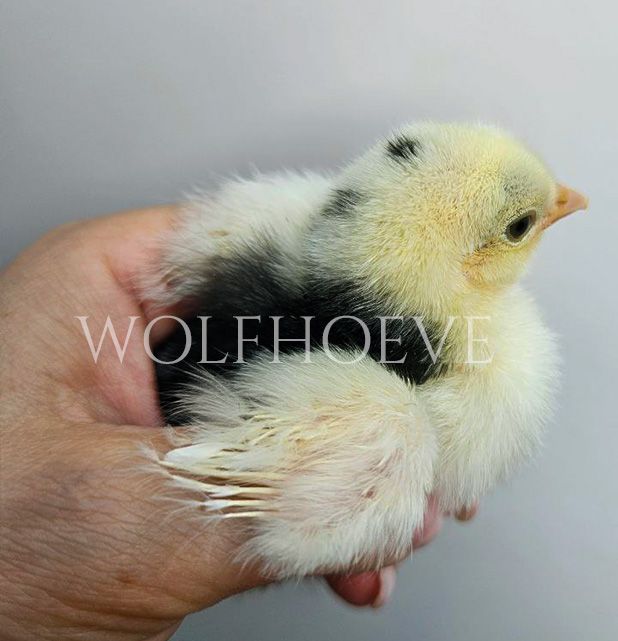
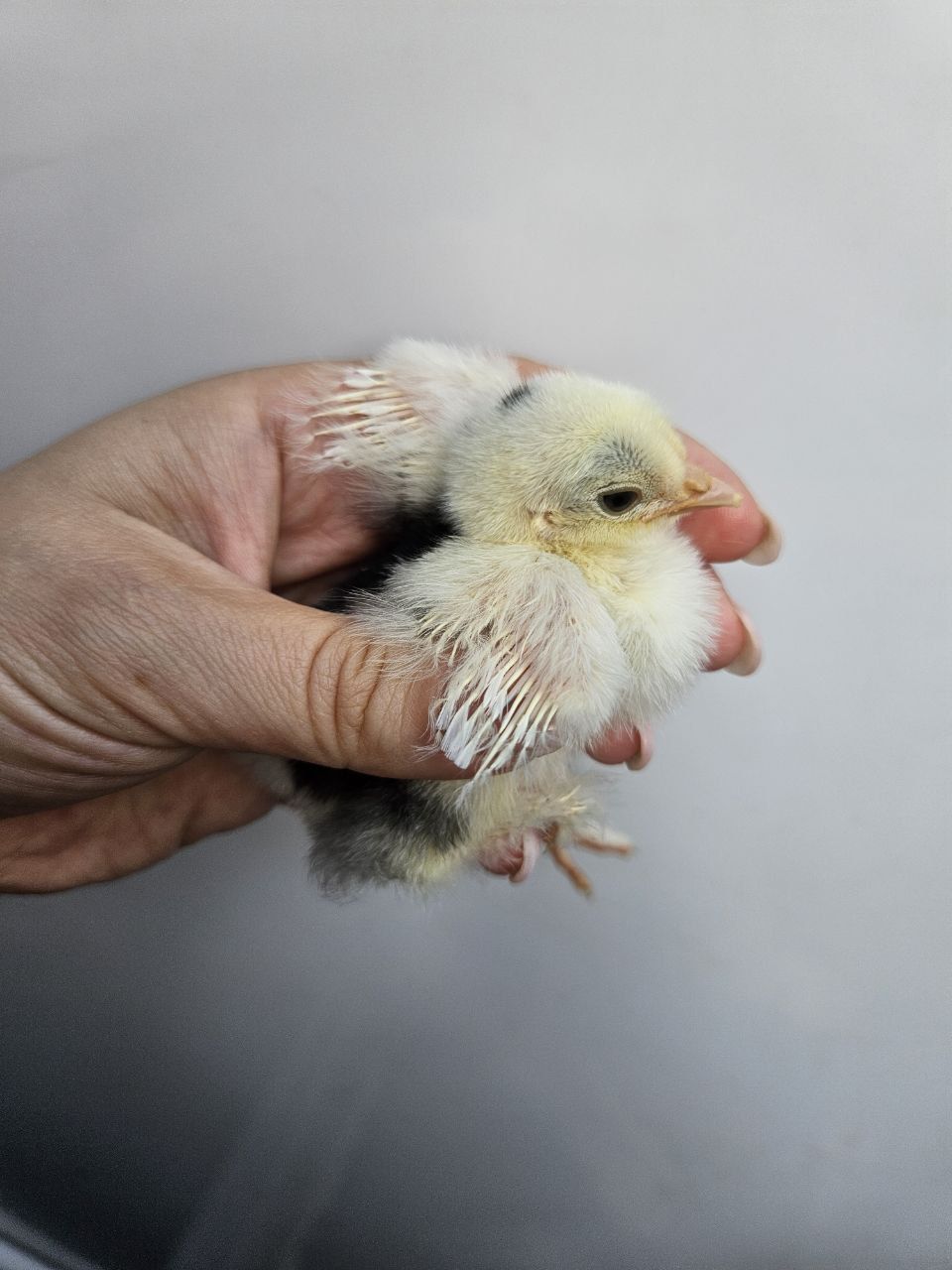
Like the down-colour crosses above, this only works in the right direction and needs a father/mother pairing set up for it — it is not a property of most breeds.
What down sexing can't do
- It only works in one direction. Swap which parent is which and every chick inherits the same allele — they all look alike. Direction is everything.
- It is not a property of most breeds. A pure Rhode Island Red or Barred Rock chick cannot be down-sexed; you need the specific cross.
- Colour sexing is different from feather sexing. See the wing-length method above — a separate sex-linked trait, not the down colour described here.
- It is not vent sexing. Down colour is the easy, no-skill route; it just isn't available for every bird.
You can set any of these crosses up and read the expected offspring — split by sex — in the Breeding Outcomes tool, which handles the sex-linked ratios automatically.
- Silver/Gold is the sex-linked
Slocus (SLC45A2): Gunnarsson U et al. (2007) Mutations in SLC45A2 cause plumage color variation in chicken and Japanese quail. Genetics 175:867–877. Sex-linked barring is the CDKN2A/B locus: Hellström AR et al. (2010) Pigment Cell & Melanoma Research 23:521–530. See the sex-linked genes page for the full crosses; genotypes match the Compare tool's standard data.