EWh) with a wash of red over a silver ground — but "salmon" is a hobby name, and the exact genes behind it are not the same in every breed. For the wider system, see the Genetics Guide.
The wheaten base (EWh)
Wheaten (EWh) is one of the alleles of the Extension series, sitting between birchen and brown in the dominance order. It lets gold dominate the body — strongly in the hen, which becomes a pale wheaten colour — while the rooster keeps his black in the breast and tail.1 That built-in split between the sexes is the starting point for salmon.
How salmon is built
Salmon adds two things to the wheaten base: a silver ground (the sex-linked Silver gene, so the pale areas are silver-white rather than gold) and a good deal of autosomal red, which paints the warm salmon tone over that silver. On a rooster basis:
| Gene | Genotype | What it contributes |
|---|---|---|
| Extension — wheaten | EWh/EWh | The light wheaten base; red dominates, rooster keeps black breast and tail. |
| Silver | S/S | A silver ground, so the pale colour is cream/white rather than gold. |
| Mahogany (standard type) | Mh/Mh | Deepens the red — present in the Wyandotte-type salmon, absent in the French Faverolles type. |
Hens carry one Z, so the sex-linked Silver is written S/– in the hen. The salmon tone itself comes from a group of minor autosomal red genes rather than one named locus, which is part of why the colour drifts from breed to breed.
Two salmons, one name
"Salmon" is a good example of a hobby name that hides more than one genotype — the same word, different genes underneath:2
| Called "salmon" | Genotype | Result |
|---|---|---|
| Standard salmon (Wyandotte type) | EWh · S · Mh | Deeper, richer salmon — mahogany intensifies the red. |
| French salmon (Faverolles) | EWh · S (no Mh) | The classic, lighter Faverolles salmon. |
| Dutch Bantam "salmon" | a different e+ base entirely | Same hobby name, but built on the wildtype duckwing base — not a wheaten bird at all. |
Why the rooster and hen look nothing alike
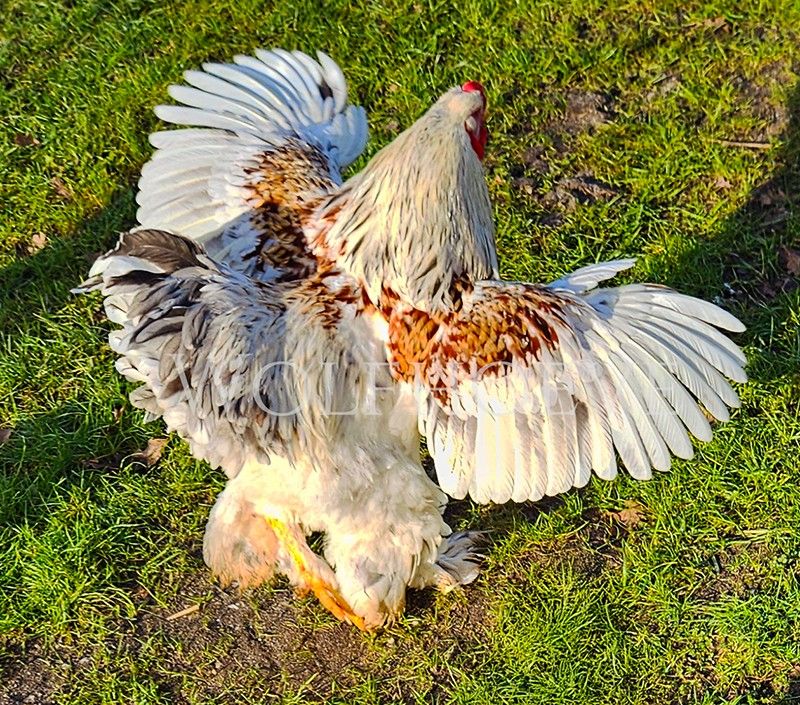
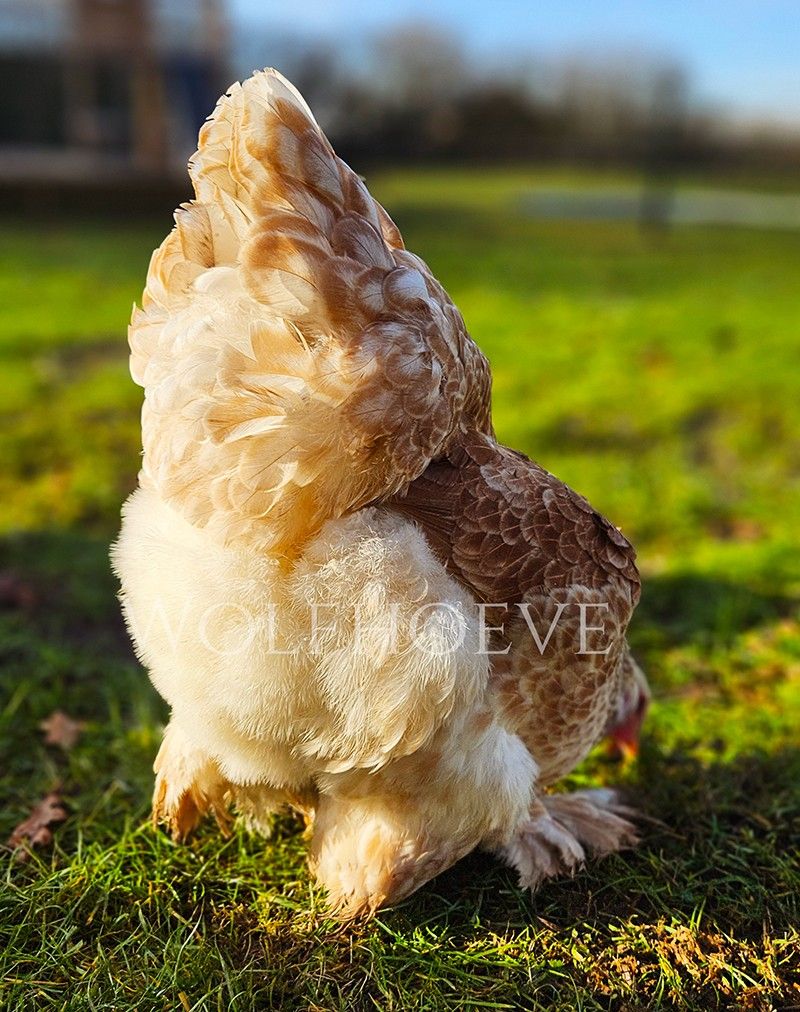
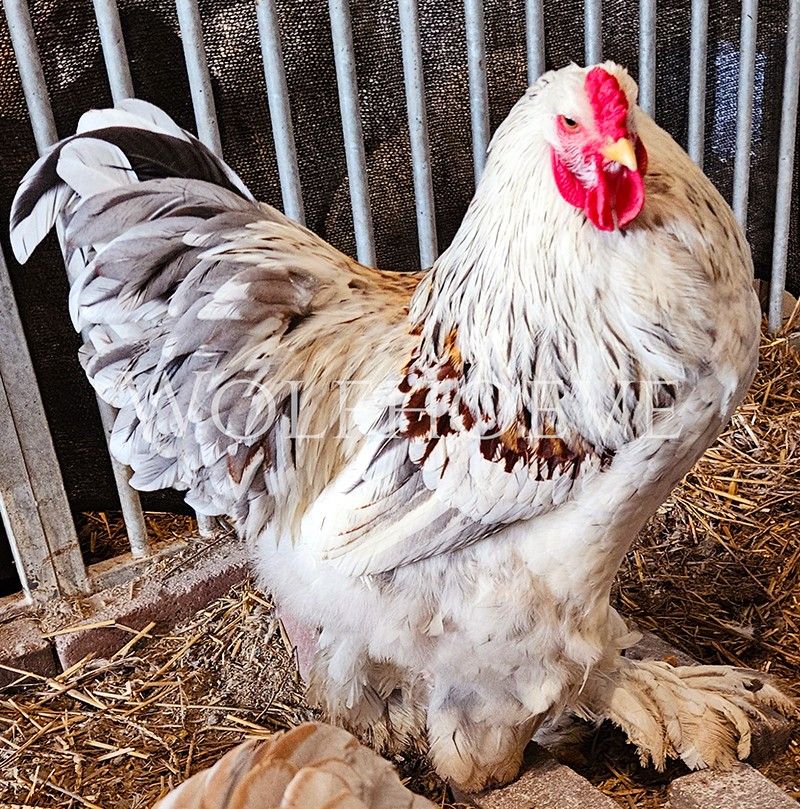
The wheaten base is strongly sex-dimorphic, and salmon shows it at its most extreme. The hen is the "salmon" everyone pictures: a salmon-brown back, a creamy-white breast and face. The rooster is another bird entirely — straw-white hackle and saddle, a black breast and tail, and a white or straw body. If you have only ever seen the hen, the matching cockerel can be a surprise. It is the same genotype expressed differently in the two sexes, exactly as the wheaten base predicts.
Add one copy of Blue and the black areas of the rooster go a solid blue-grey — the "blue salmon" variant; add a second copy (Splash) and those same areas turn a mottled blue-and-white instead — "splash salmon." To see how salmon sits against a plain, unmodified base, compare it with the gold duckwing, or plan a cross in Breeding Outcomes.
- The Extension locus is MC1R;
EWh(wheaten) sits in its allelic series (E > ER > EWh > e+ > eb) and lets red dominate the body. Kerje S et al. (2003) Melanocortin 1-receptor (MC1R) mutations are associated with plumage colour in chicken. Animal Genetics 34(4):241–248. Series framework: Smyth JR Jr (1990), in Crawford RD (ed.) Poultry Breeding and Genetics — see the Genetics Guide references. - The multiple genotypes behind the "salmon" name (Wyandotte-type with mahogany, French Faverolles without, and the separate
e+-based Dutch Bantam salmon) follow the standard data used by the Compare tool; genotypes shown here match that standard data.