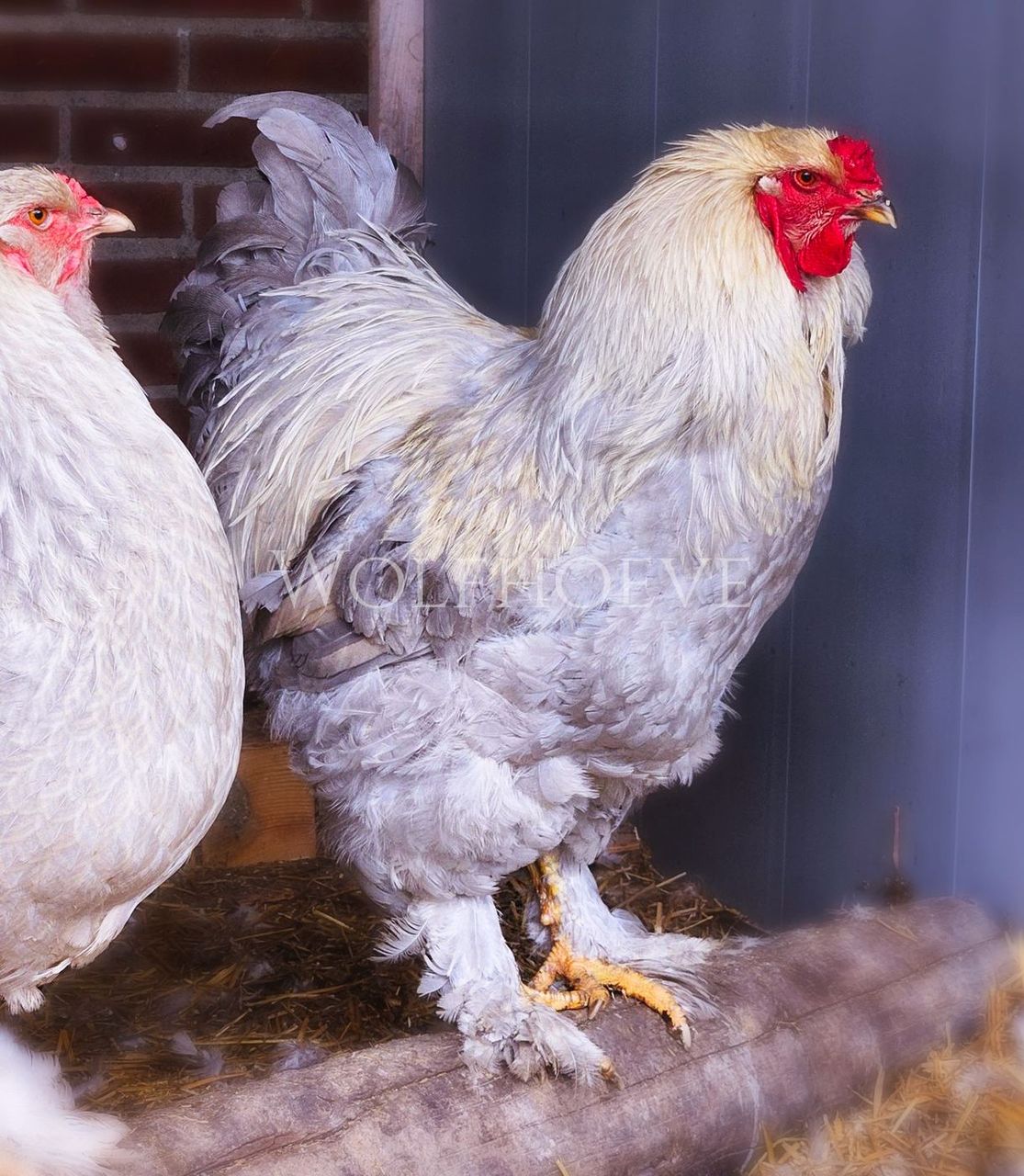
How it's built: a gold base + lavender
Isabel starts from a gold or partridge/duckwing base — a bird whose ground colour is pheomelanin (gold) with black markings — and adds two copies of recessive lavender:
| Component | Genotype | Effect |
|---|---|---|
| Gold / partridge base | a gold-ground eb or e+ bird | Gold/red ground with black markings. |
| Lavender | lav/lav | Dilutes both pigments — gold → pale straw/fawn, black → soft grey.1 |
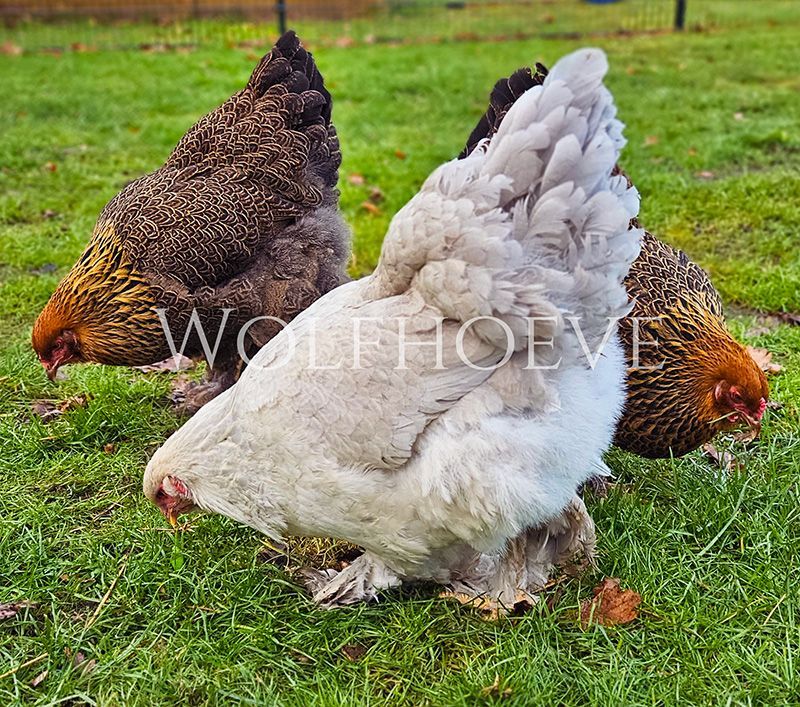
Because lavender dilutes both pigments, an isabel bird keeps the layout of its gold-based ancestor — the same markings in the same places — just rendered in muted straw and grey instead of gold and black. It is a dilution, not a new pattern.
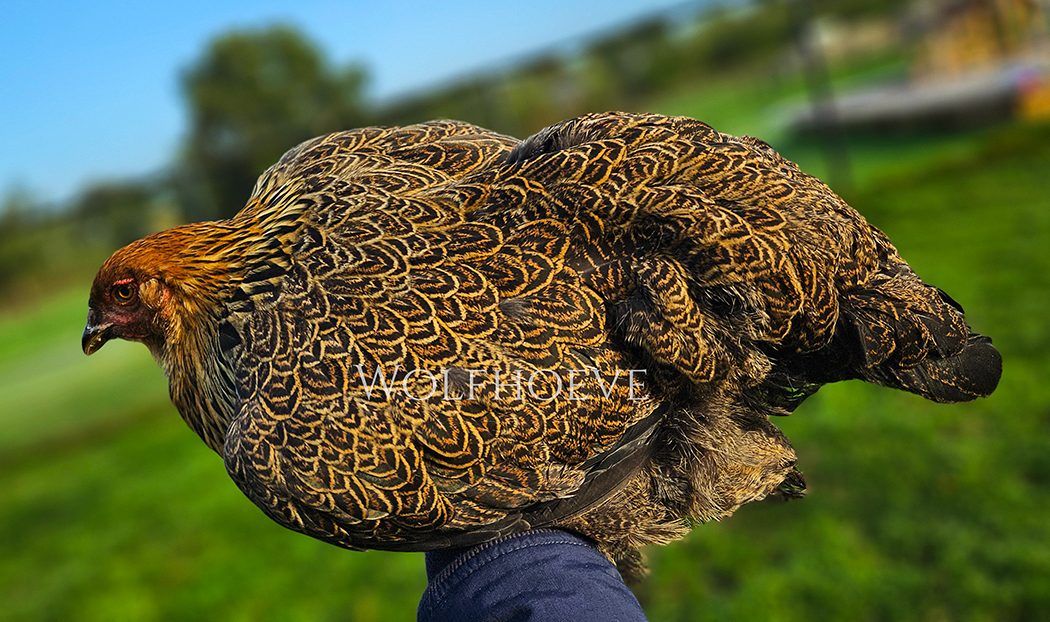
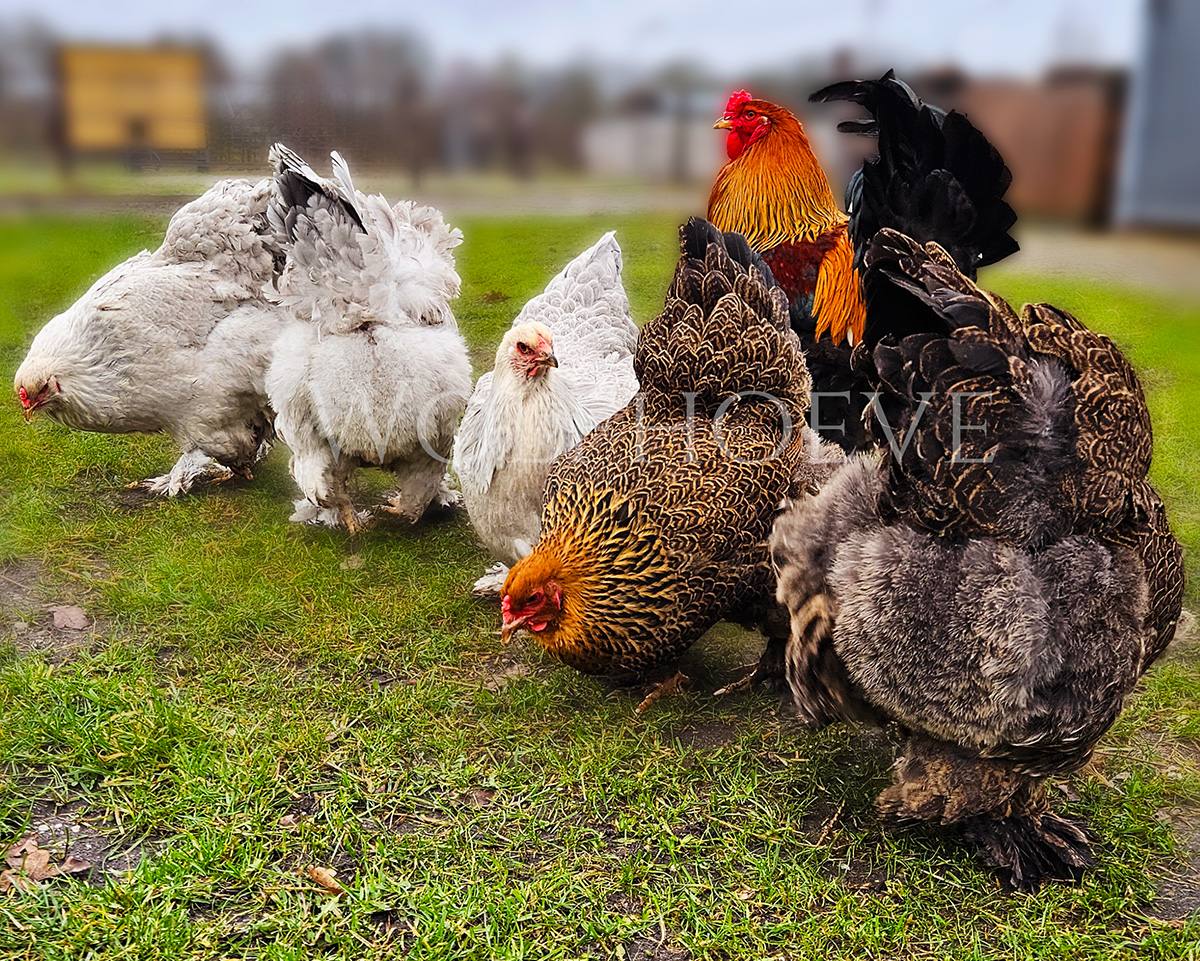
A note on which base. The birds pictured on this page are specifically eb-based partridge, not the true wildtype e+ duckwing described on the Partridge & Duckwing page. Both look similar — gold with black markings — but they sit on different Extension alleles, and lavender dilutes either base the same way.
The lavender family
Isabel, porcelain and self-blue are one gene (lav/lav) on three different bases. Seen side by side, the family makes the "what does lavender do" question concrete:
| Variety | Base | Lavender turns it into… |
|---|---|---|
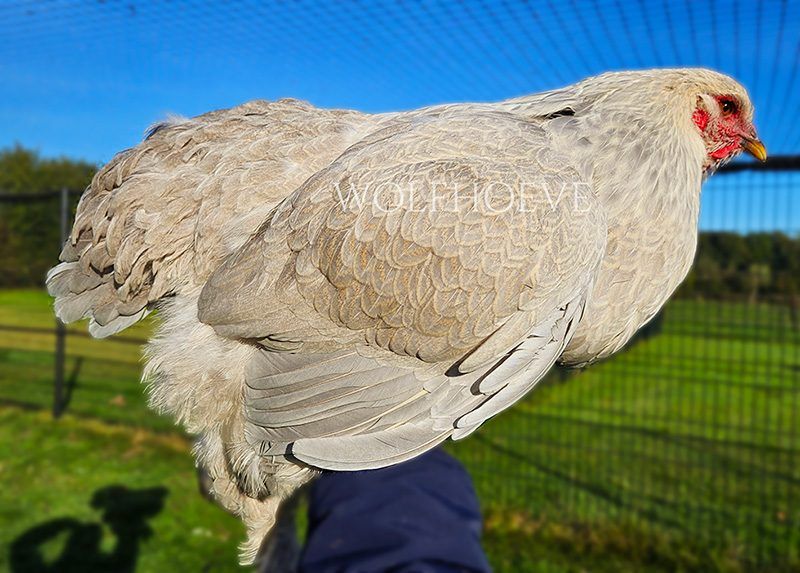
| Self-blue / lavender | Black (self) | An even pale lavender-grey bird. |
| Porcelain | Mille fleur | Cream ground, grey crescents, white tips. |
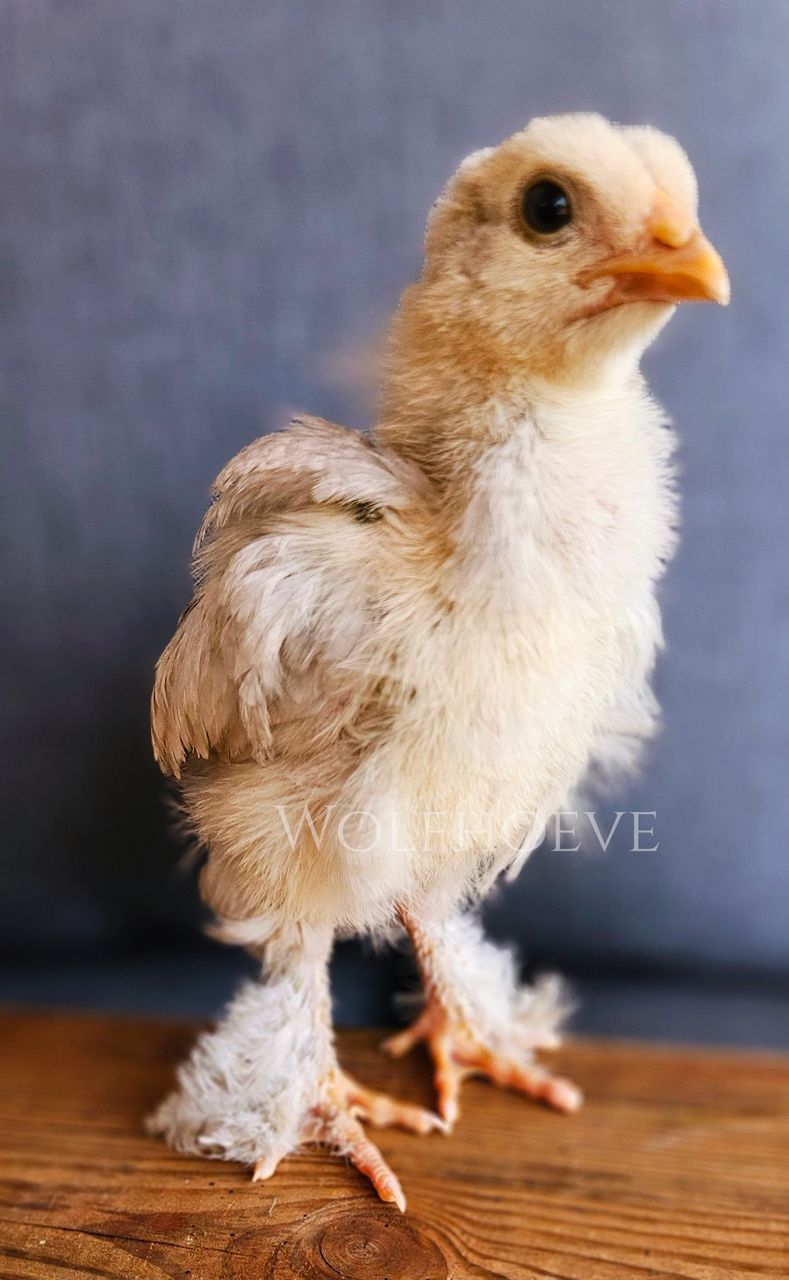
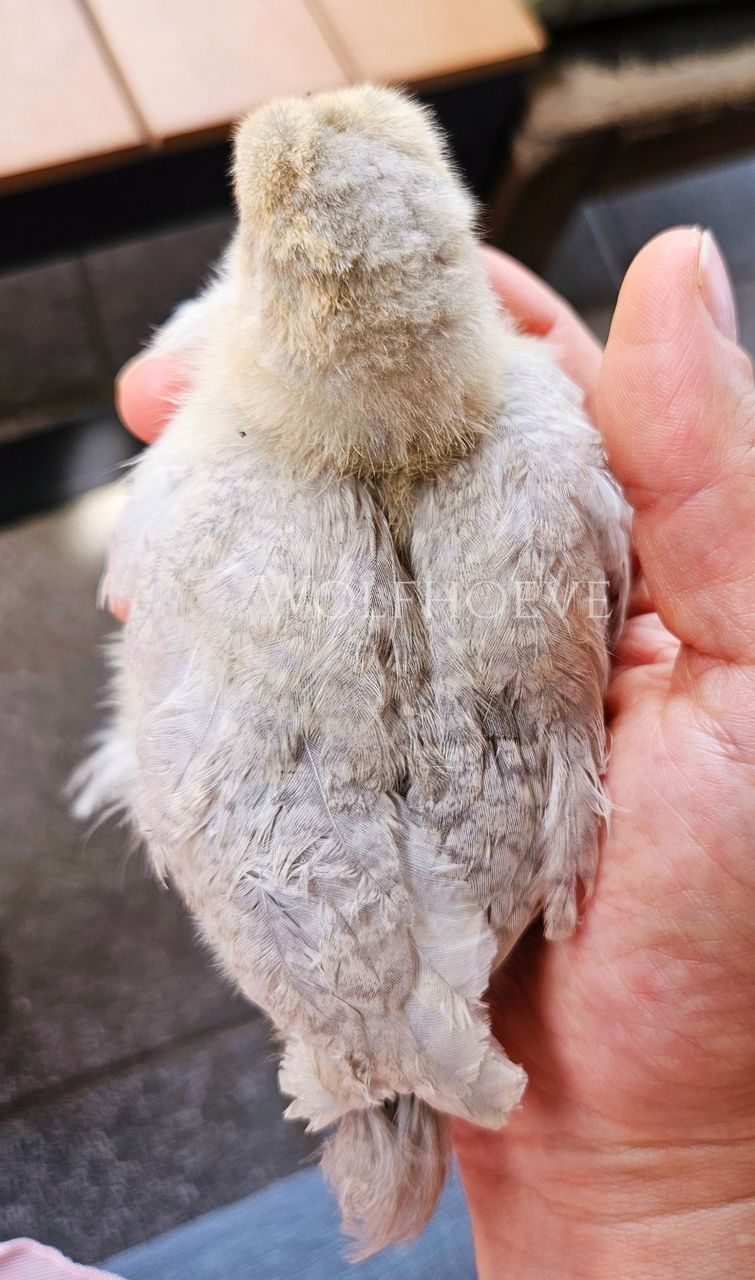
| Isabel | Gold / partridge | Straw-fawn ground with soft grey markings. |
Same gene, same job — dilute both pigments — with the result decided by the base it sits on. See Lavender genetics for how the gene itself works, and Porcelain for the mille-fleur version.
How it breeds
Isabel inherits like any lavender variety, because lavender is recessive:
- Isabel × isabel breeds true for the dilution — both parents are
lav/lav(ground and pattern modifiers can still vary). - Isabel × a non-lavender gold bird gives an F1 that looks like the ordinary gold/partridge parent: every chick carries one lavender allele, hidden. Isabel reappears in about a quarter of the F2 — the same disappearing act described on the lavender page.
- Vaez M et al. (2008) A single point-mutation within the melanophilin (MLPH) gene causes the lavender plumage colour dilution phenotype in the chicken. BMC Genetics 9:7 — the recessive lavender dilution of both pigments. Extension base per Smyth JR Jr (1990); see the Genetics Guide references.