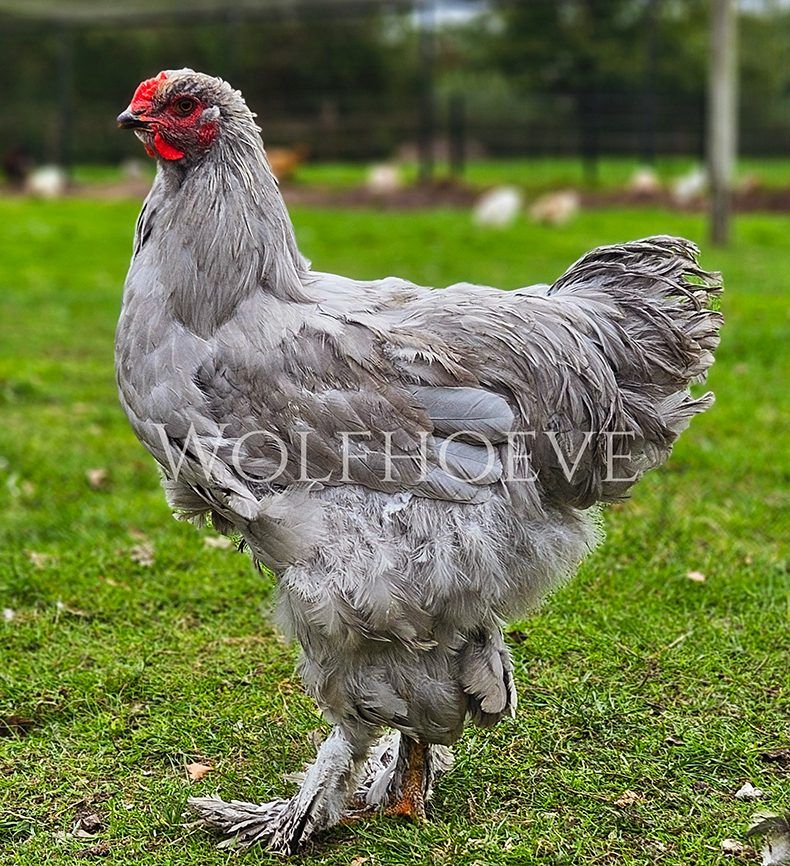
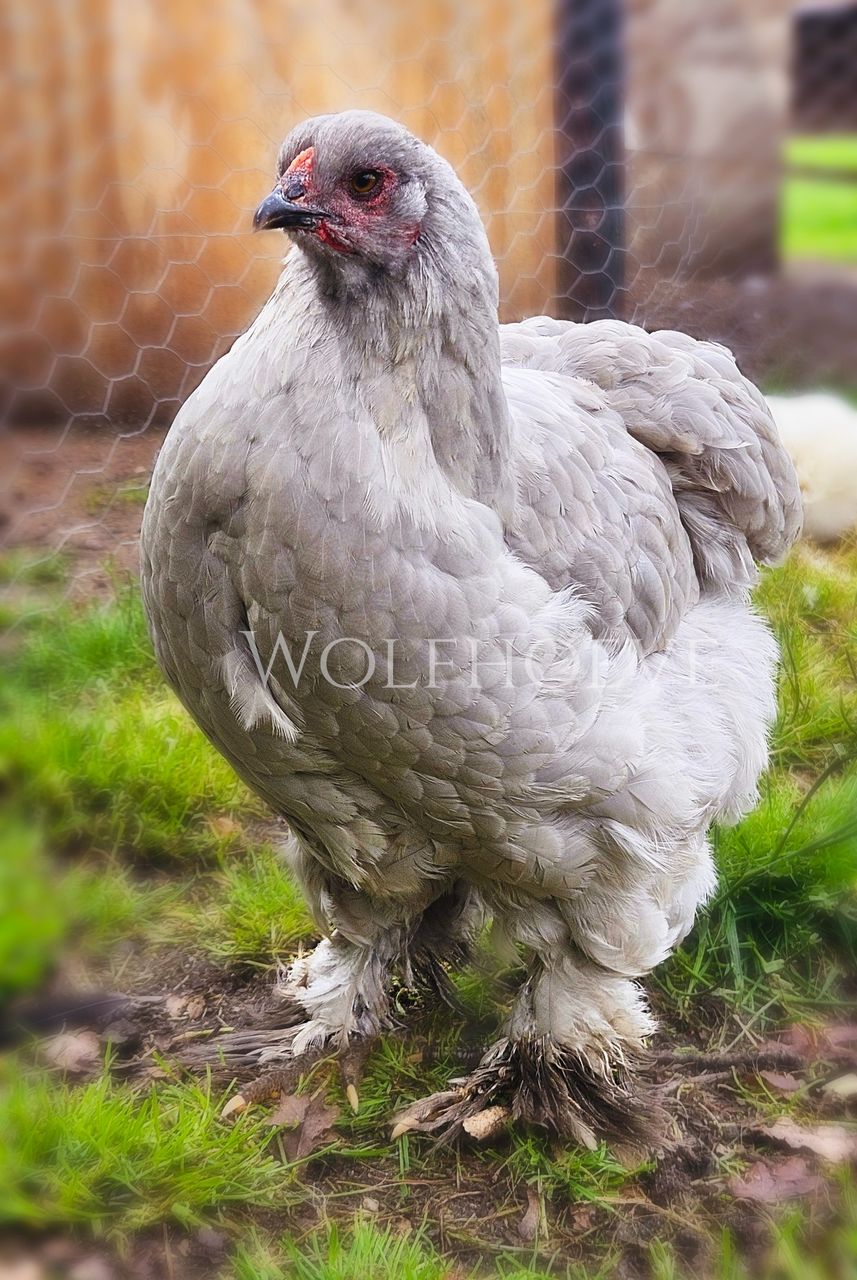
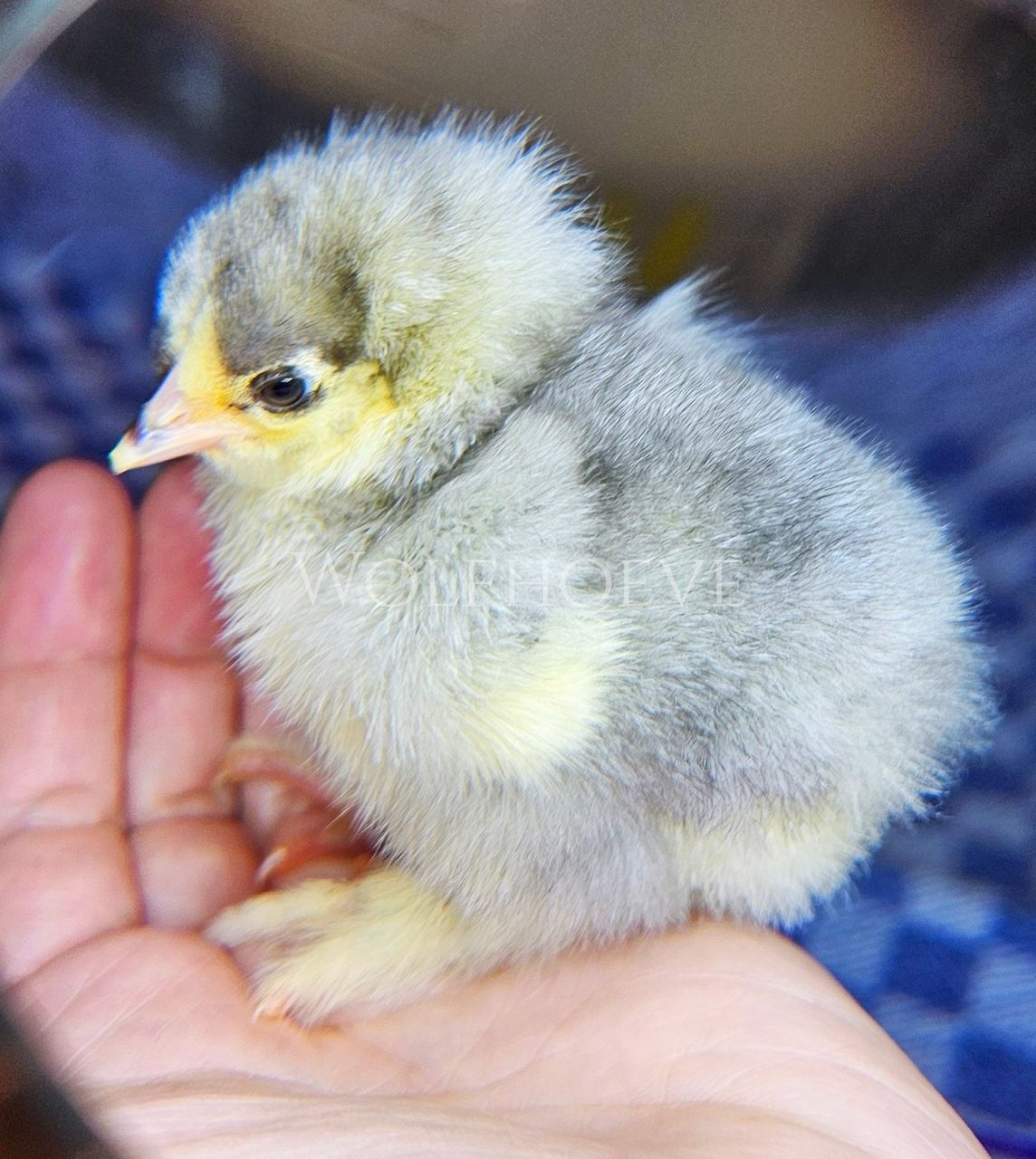
The lavender gene (lav / MLPH)
Lavender is a single recessive gene. Its molecular identity is well established: a point mutation in MLPH, the melanophilin gene.1 Melanophilin is part of the machinery that transports pigment granules (melanosomes) to the edge of the pigment cell so they can be handed off into the growing feather. The mutation disrupts that transport, so pigment ends up delivered patchily and at reduced density1 — which the eye reads as an even, washed-out dilution.
Crucially, lavender dilutes both pigments: eumelanin (black) becomes a pale lavender-grey, and pheomelanin (gold) becomes straw or cream. That both-pigment action is the single most useful thing to remember about it.
How it inherits — the disappearing act
Because lavender is recessive, a bird only looks lavender when it carries two copies (lav/lav). A single copy makes a carrier (Lav+/lav) that looks completely normal but passes the gene on silently. That is why lavender behaves the way it does across generations:
| Cross | Offspring |
|---|---|
| Lavender × Lavender | 100% Lavender |
| Lavender × non-carrier | 100% normal-looking — but all are carriers |
| Carrier × Carrier | 25% Lavender · 50% carrier (look normal) · 25% non-carrier |
| Lavender × Carrier | 50% Lavender · 50% carrier |
Lavender vs Blue
This is the comparison worth getting straight, because the two are constantly mixed up:
| Lavender (self-blue) | Blue | |
|---|---|---|
| Inheritance | Recessive — hides in carriers | Incompletely dominant — always visible |
| Pigments diluted | Both (black and gold) | Eumelanin (black) only |
| Gold areas | Washed out to straw/cream | Stay full and bright |
| "Two copies" look | No splash form — one even grey | Two copies give splash |
The quickest field test: look at the red or gold. If it is still bright, you are probably looking at Blue; if it has washed out to straw along with everything else, it is Lavender. And related varieties build on lavender — porcelain, for instance, is lavender applied to a mille-fleur base, softening its colours.
- Vaez M, Follett SA, Bed'hom B, Gourichon D, Tixier-Boichard M, Burke T (2008) A single point-mutation within the melanophilin (MLPH) gene causes the lavender plumage colour dilution phenotype in the chicken. BMC Genetics 9:7 — identifies the recessive MLPH mutation and its effect on melanosome transport.