How it's built: mille fleur + lavender
Start from the mille fleur genotype — a brown base spangled with black by the Pattern and Melanotic genes and tipped white by mottling1 — and add two copies of recessive lavender. The full genotype is eb/eb · Db/Db · Pg/Pg · Ml/Ml · mo/mo · lav/lav:
| Component | Genotype | Effect |
|---|---|---|
| Mille fleur base | eb/eb · Db/Db · Pg/Pg · Ml/Ml · mo/mo | The tricolour: gold ground, black spangle, white tip. |
| Lavender | lav/lav | Dilutes both pigments — gold → cream, black → blue-grey; white is unaffected.2 |
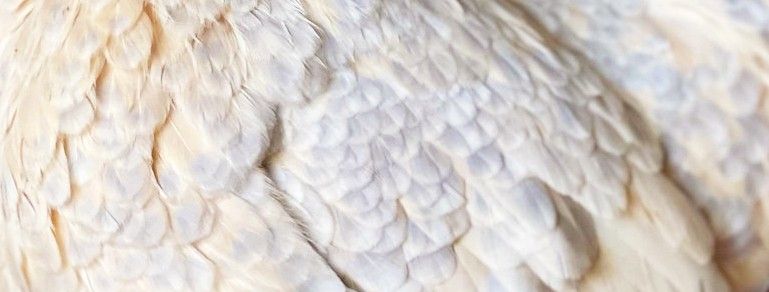
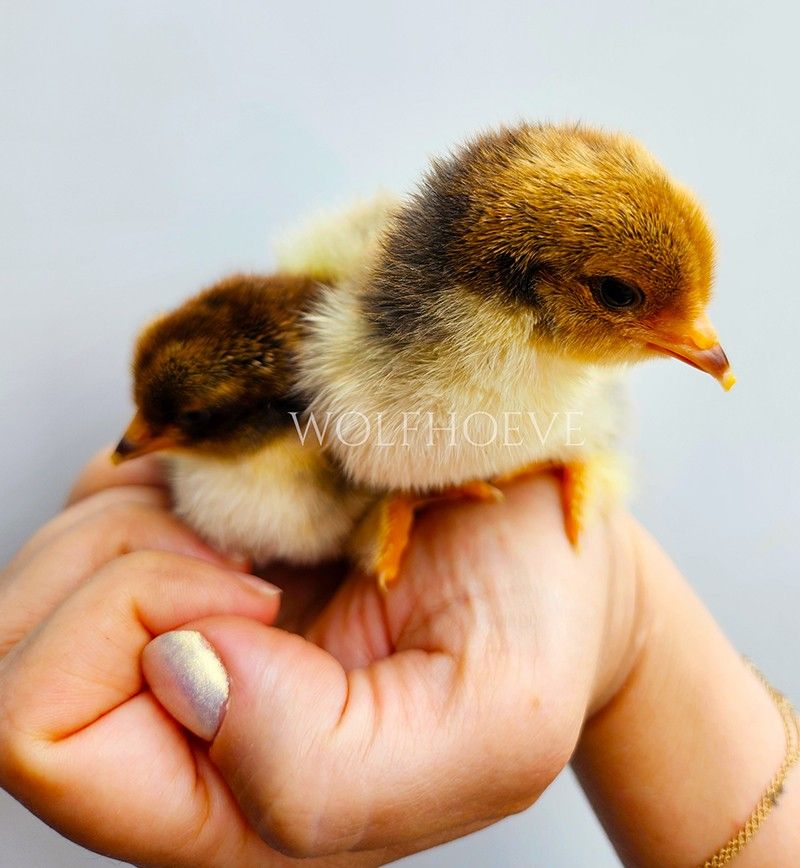
The result is the same three-part feather as mille fleur, only in pastel: cream where the bird would have been gold, soft blue-grey where it would have been black, and unchanged white at the tip. Lavender is a recessive dilution of both pigments — the same gene behind self-blue birds — which is why it lightens the warm and the dark tones together.
How it breeds
Porcelain stacks two recessive requirements — mo/mo (from mille fleur) and lav/lav — so a porcelain bird must be homozygous for both. That shapes how it behaves in the pen:
- Porcelain × porcelain breeds true — both parents supply
mo/moandlav/lav. - Porcelain × mille fleur gives an entire F1 that looks like mille fleur: every chick inherits one lavender allele but also a normal one, so the lavender is carried, hidden. Porcelain reappears in about a quarter of the F2, when two lavender carriers are bred together — exactly the disappearing act described on the lavender page.
Telling it apart from mille fleur
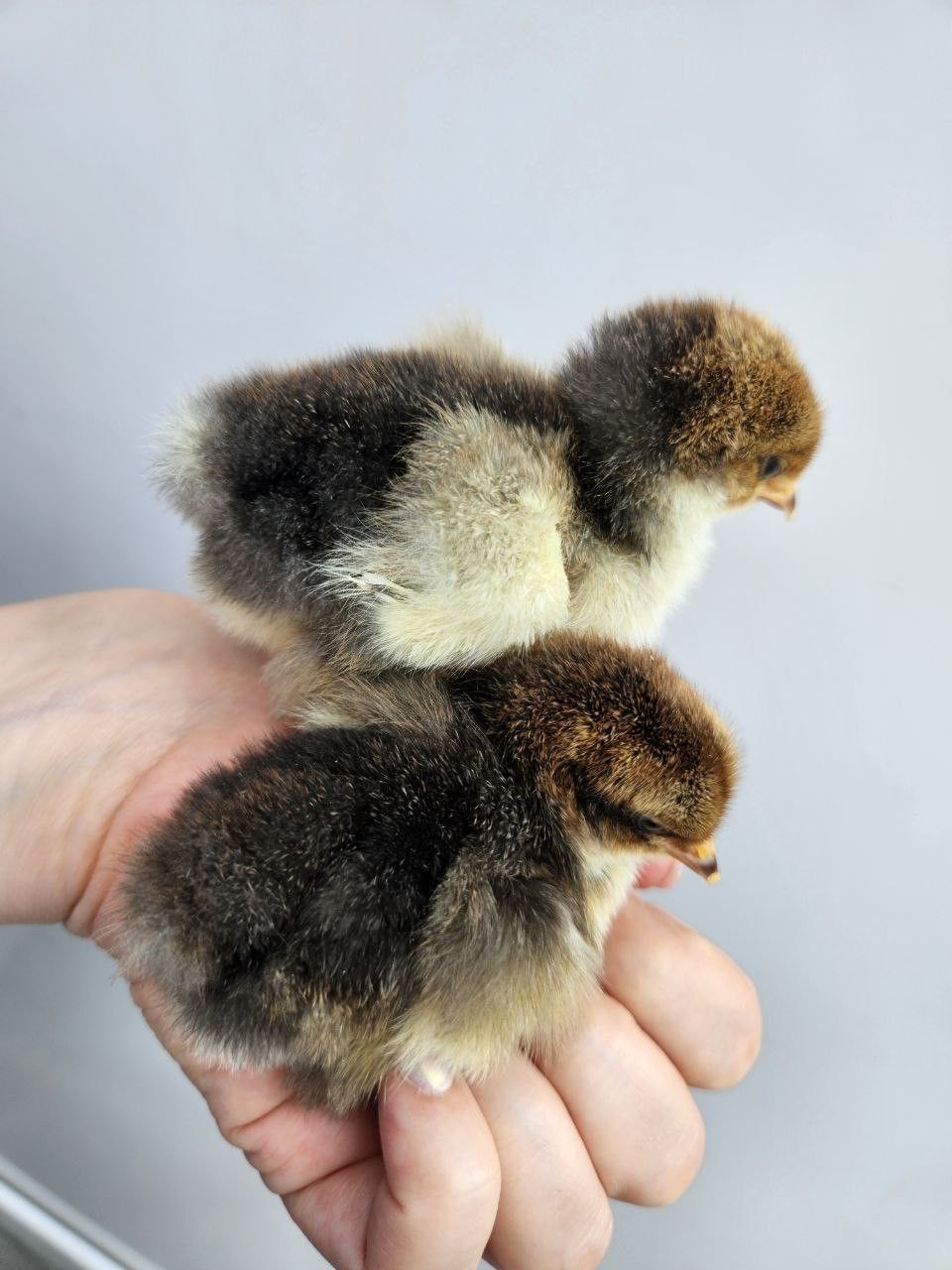
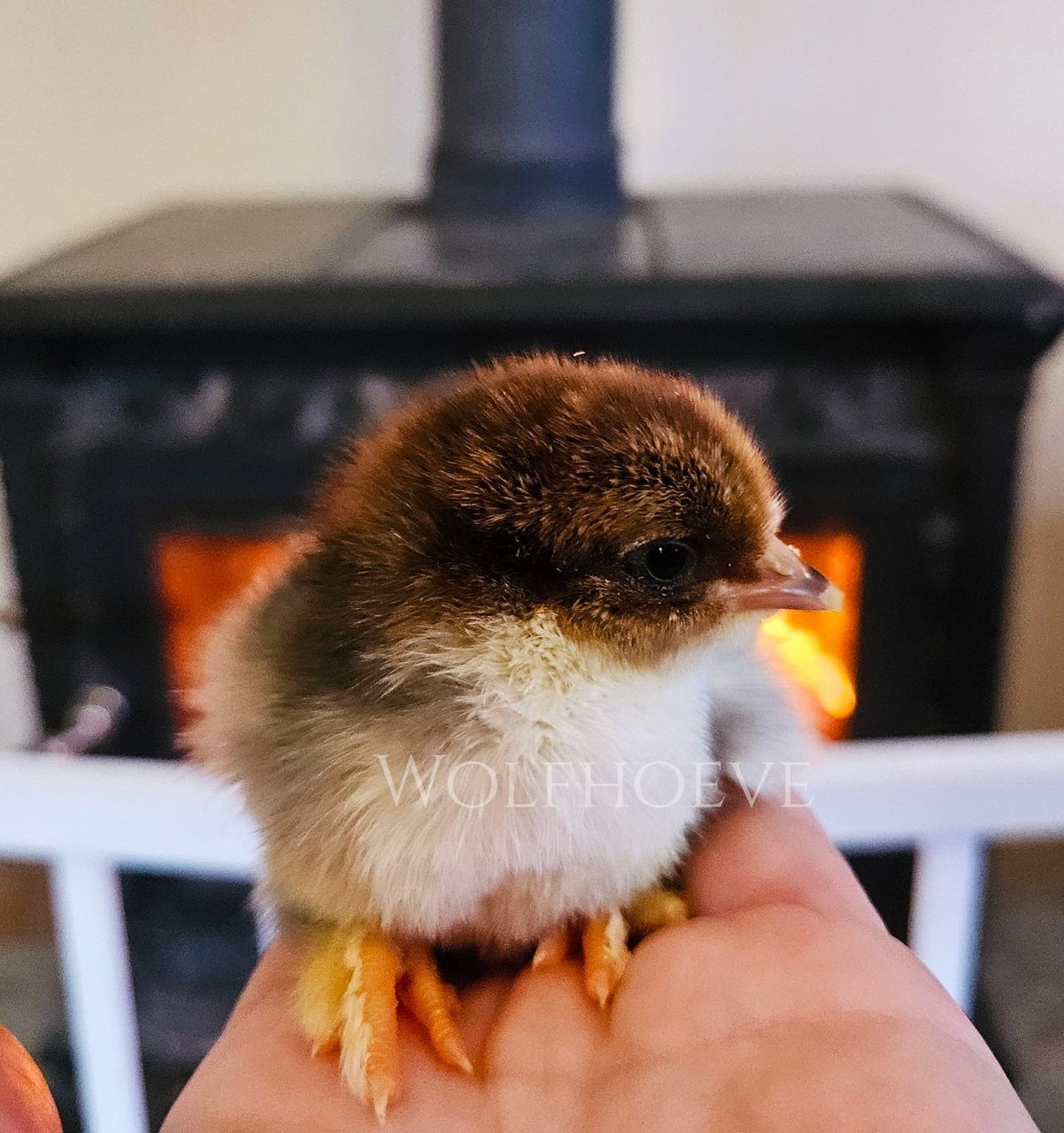
The two are the same pattern at different saturations, so the tell is simply intensity: mille fleur reads as gold-black-white with strong contrast; porcelain reads as cream-grey-white, soft and low-contrast. If the "black" crescents look blue-grey and the ground looks like milky cream rather than gold, lavender is present and you are looking at porcelain. The same logic applied to a plain gold/partridge base — lavender without the mille-fleur pattern — gives isabel.
- Somes RG Jr (1980) The mottling gene, the basis of six plumage color patterns in the domestic fowl. Poultry Science 59(7):1370–1374 — the recessive mottling gene (
mo) shared by mille fleur, porcelain and related patterns. - Vaez M et al. (2008) A single point-mutation within the melanophilin (MLPH) gene causes the lavender plumage colour dilution phenotype in the chicken. BMC Genetics 9:7 — the recessive lavender dilution of both pigments.