mo/mo, that pauses pigment at the very start of each feather's growth — so the tip comes in white, then colour resumes underneath. What that tip looks like on the finished bird depends entirely on what other genes are already running underneath it: on a solid black bird it is a neat white V; on a gold mille fleur it is the last of three coloured bands; on a laced Tollbunt it sits on top of black edging. Same gene, very different standards. For the wider system, see the Genetics Guide.
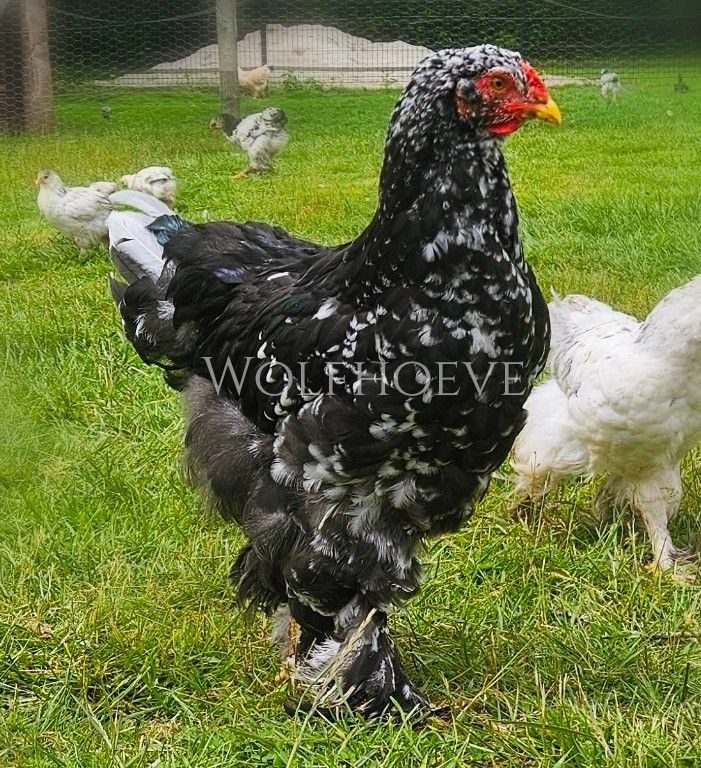
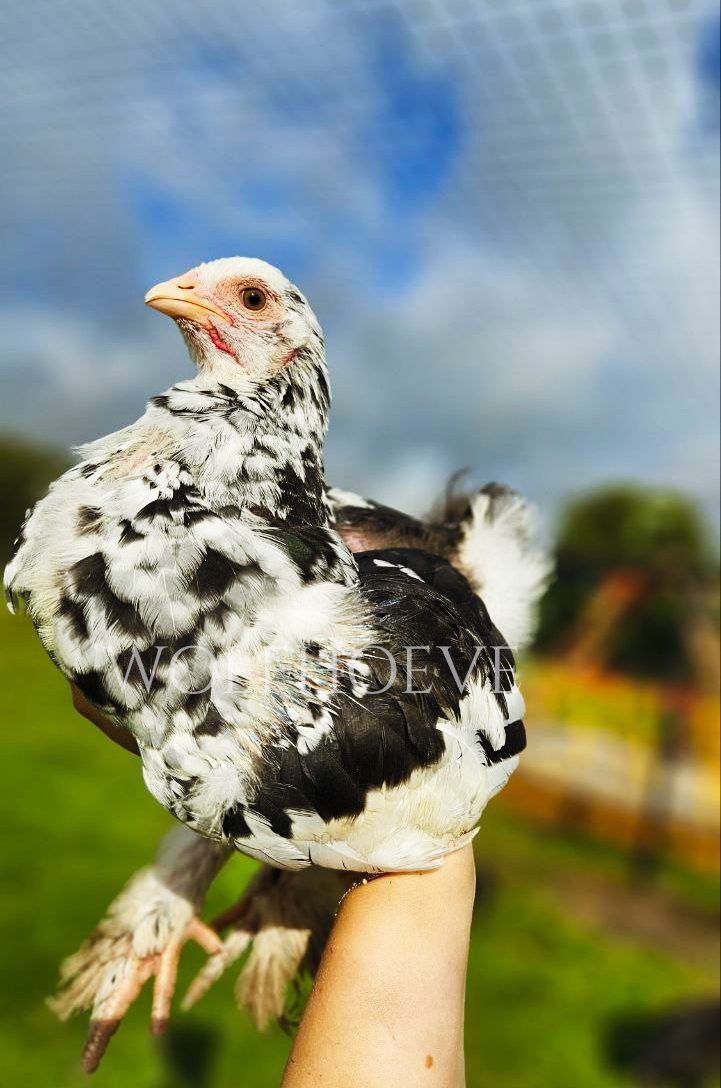
What mottling actually does
Each new feather starts to grow without pigment cells in place, so the very tip is always white. Once pigment cells catch up, colour resumes — eumelanin (black) first, then pheomelanin (gold) if the bird carries it, which is why a gold-based mottled bird often shows a thin dark band just under the white tip before the ground colour appears. Because pigment-cell renewal slows with age, that white tip grows larger with every moult — a mottled bird whitens visibly as it gets older.1
| Gene | Genotype | What it contributes |
|---|---|---|
| Mottling | mo/mo | Pauses pigment at the start of each feather's growth, leaving the tip white; the white area expands with each successive moult. |
The gene behind it is known. Mottling sits at EDNRB2, the endothelin receptor B2 gene, which carries the signal telling pigment cells to mature, multiply and migrate into the feather bulb; a bird with two faulty copies supplies them late, which is the gap in pigment at each feather's start.2 It is a timing fault rather than a dilution — it does not reduce how much pigment a feather can carry, only delays when the supply arrives.
One gene, several mutations
Which change to EDNRB2 a mottled bird carries turns out not to be one answer. The first identified, Arg332His, was found in several Japanese breeds and was for a decade treated as the mottling mutation.2 A 2026 survey across mottled breeds found that the Mottled Houdan — a French breed nobody would question the mottling of — does not carry it, and that a different change in the same gene, Ala228Thr, tracks mottling completely in the Houdan and in three further mottling breeds. No single mutation matched every mottled breed tested, so at least three separate mottling alleles are proposed; carriers also show the two copies of the gene expressed unequally, which points to changes in how the gene is switched on as well as changes to the protein. The same gene appears to have been broken independently more than once, in breeds developed apart from one another.3
| Change in EDNRB2 | Found in | What is established |
|---|---|---|
| Arg332His | Several Japanese breeds | The originally described mottling mutation. Not carried by every mottled breed. |
| Ala228Thr | Mottled Houdan and three other mottling breeds | Completely associated with mottling in those breeds. |
| Not yet identified | Mottled breeds carrying neither of the above | At least one further allele is implied, and unequal expression between a carrier's two copies suggests regulatory change rather than a further amino-acid substitution. |
The same locus also carries a form of recessive white, mow, which is why a mottling line outcrossed to certain white birds can behave unexpectedly: the two are alleles of one gene rather than two independent genes, so they do not assort independently.2
mo/mo to show, and still plannable as an ordinary recessive. What it changes is what a DNA test can promise: a test built on one of these mutations answers only for the breeds carrying it, and can call a genuinely mottled bird clear in a breed that carries a different one. It also means two mottled birds from unrelated breeds may not carry the same change — but because both changes sit at the same gene, crossing them is still expected to give mottled chicks rather than the clear F1 two separate genes would produce.
Same gene, different standards
mo/mo is recessive and behaves identically wherever it sits — but the base pattern it lands on decides what the finished variety looks like. Here are established standards built on the same gene:
| Standard | Base genotype | What mottling adds |
|---|---|---|
| Black Mottled (Ancona) | E/E · Ml/Ml · mo/mo | Neat, organised white V-tips on an otherwise solid black feather. |
| Exchequer | same base, bred for extreme expression | Roughly equal black and white in large, asymmetric patches — the same genotype as Black Mottled, pushed to its far end by selection. |
| Random Mottled (e.g. Houdan) | Ml/Ml · mo/mo on any black base | Irregular, unorganised white — less uniform than the Ancona pattern. |
| Speckled / Red Mille Fleur (Sussex Speckled) | e+ · Mh · Pg · Ml · mo | A red/mahogany duckwing base instead of gold — same three-zone spangle-and-tip structure as gold mille fleur, in a deeper colour. |
| Mille Fleur (gold) | eb · Db · Pg · Ml · mo | Black spangle over a gold ground — see Mille Fleur genetics. |
| Porcelain | eb · Db · Pg · Ml · mo · lav | Mille fleur softened by lavender to cream and grey — see Porcelain genetics. |
| Tollbunt | eb · Co · Pg · Ml · mo | Black lacing (from Columbian) instead of a spangle, plus the white tip — see Tollbunt genetics. |
| Buff Columbian Mottled | eb · Co · mo | White tips added over a Buff Columbian bird's black hackle/tail/wing-tip markings. |
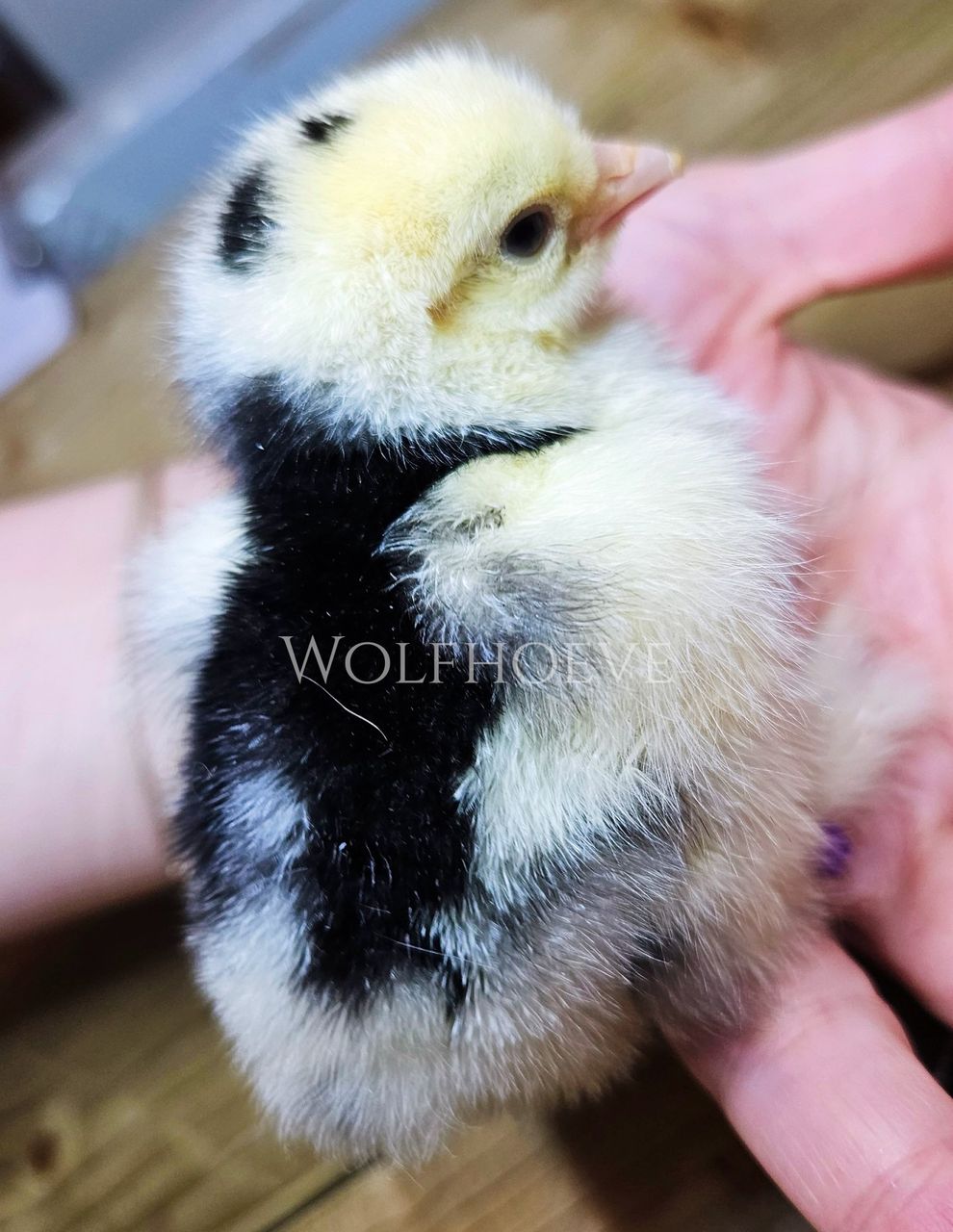
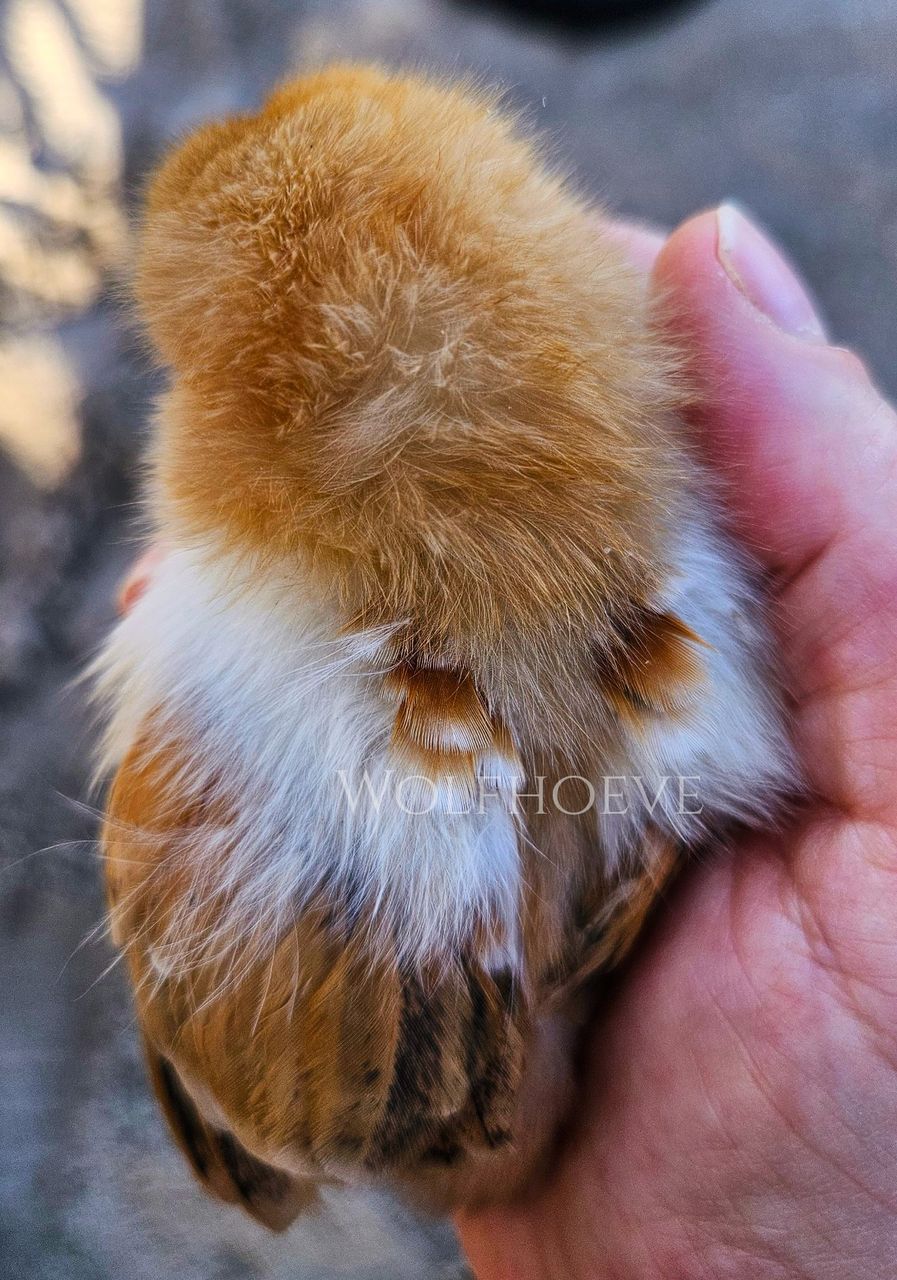
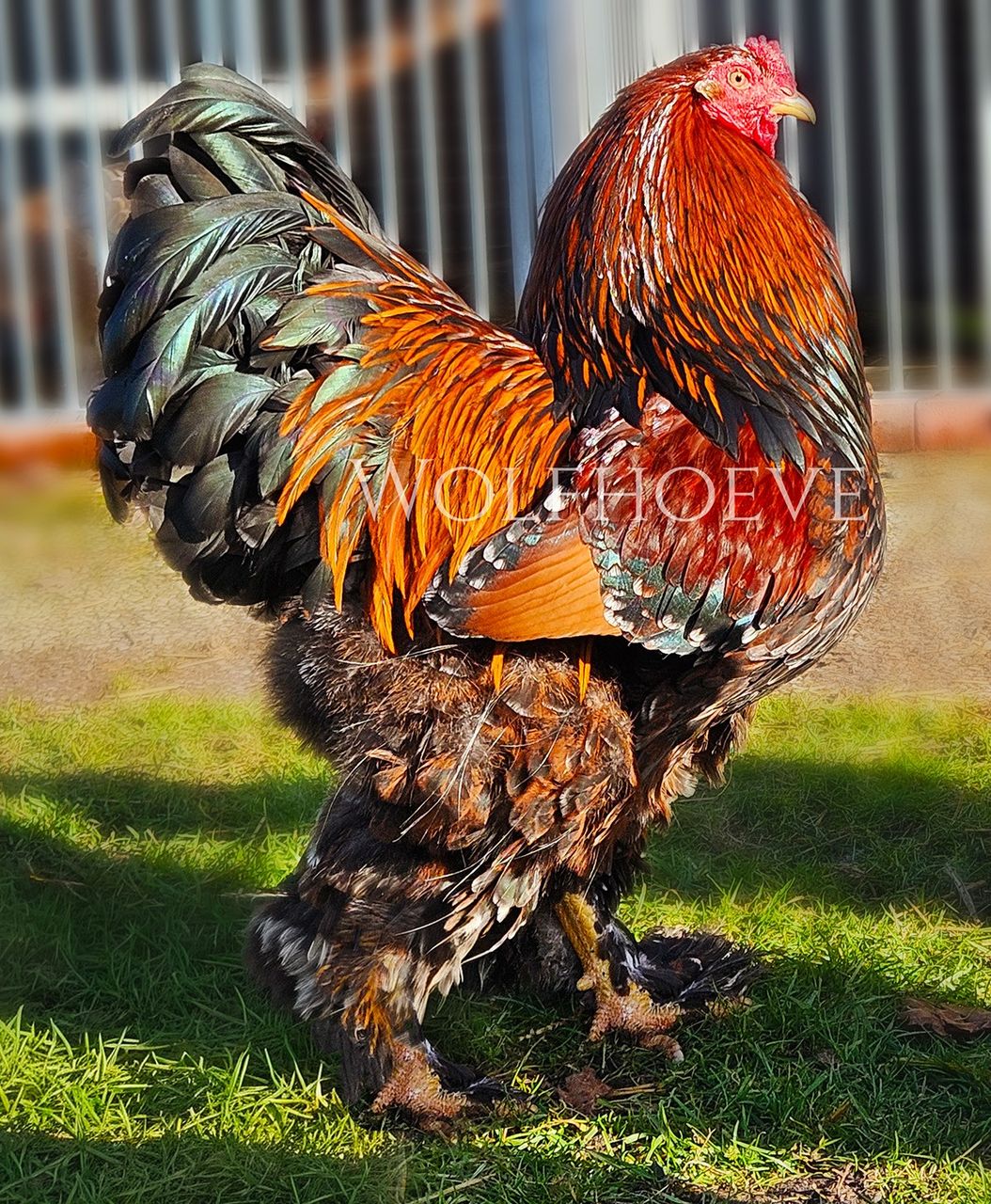
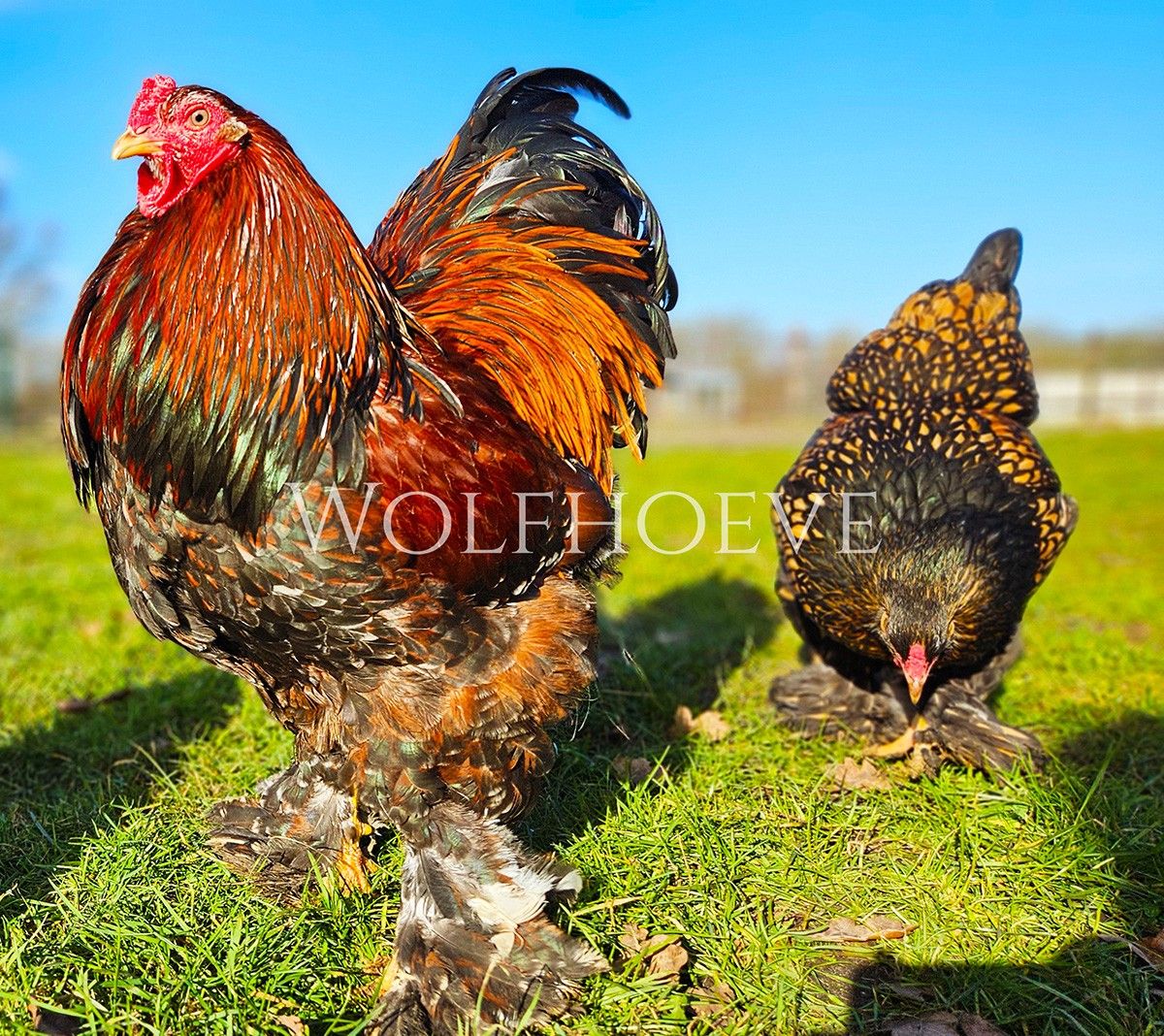
Mottling also shows up on a mahogany/partridge base, where the white fleck tips sit over deep red-and-black patterning instead of a solid ground:
How it can drift toward "spangled"
Genuine spangling — a Hamburg-type spangle — comes from a different set of genes entirely (Pattern, Dark Brown and Melanotic together, with no mottling involved). But because mottling's white-tipped, dark-banded structure can look spangle-like at a glance, the word "spangled" gets applied loosely in some standards to birds that are genetically mottled, not spangled. Old English Game "Spangled" is a well-known example: it is genetically mottled, and has nothing to do with a real Pg/Db/Ml spangle.4 The same visual overlap is part of why the amount of white in any mottled bird keeps changing with age and selection — more white per moult can push a mottled bird's appearance further toward what a casual eye calls "spangled," even though no spangle gene is present.
How it breeds
Because mo/mo is fully recessive, an outcross to a non-mottled bird hides it completely in the F1 — those chicks look plain but carry one copy — and the white tips reappear in about a quarter of the F2, the standard recessive pattern. Two mottled parents (both mo/mo) breed the tipping true every time; what still needs selecting each generation is how much white each bird shows, since expression grows with age and drifts without active selection pressure in either direction. You can plan mottling crosses in the Breeding Outcomes tool.
- Somes RG Jr (1980) The mottling gene, the basis of six plumage color patterns in the domestic fowl. Poultry Science 59(7):1370–1374.
- Kinoshita K, et al. (2014) PLoS ONE — identifies a substitution (Arg332His) in the EDNRB2 gene disrupting endothelin‑3/EDNRB2 signalling as the molecular basis of the mottling phenotype. doi.org/10.1371/journal.pone.0086361.
- The mottling phenotype in chickens shows genetic heterogeneity and is caused by mutations at the EDNRB2 locus (2026), Animal Genetics. Reports that Arg332His is not causal in the Mottled Houdan, that Ala228Thr is completely associated with mottling in the Houdan and three further breeds, that no single mutation is concordant across all mottled breeds, and that allelic imbalance in heterozygotes implicates regulatory variation. pmc.ncbi.nlm.nih.gov/articles/PMC13378286.
- Genotypes and the Old English Game "Spangled" naming note match the Compare tool's standard data.