The genes that build it
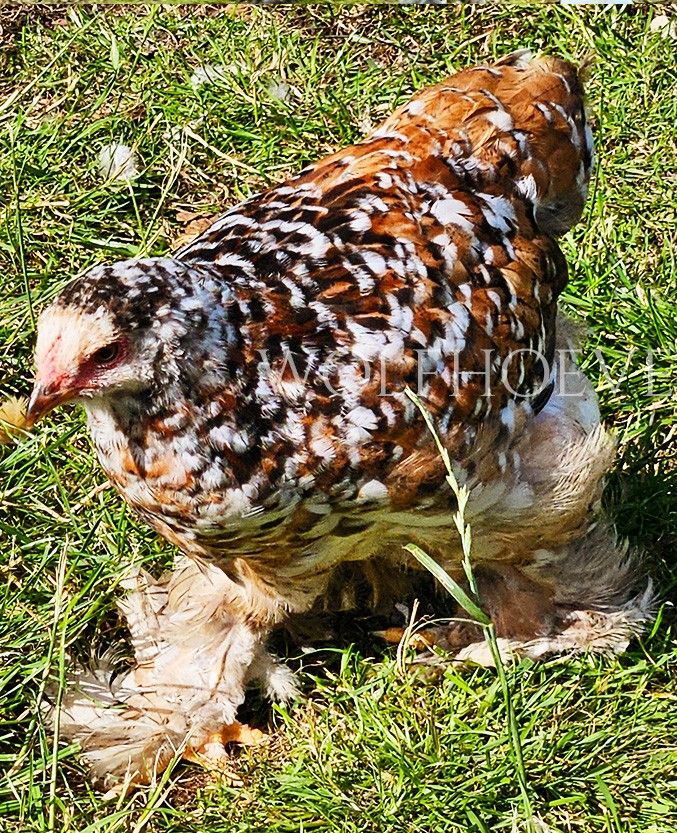
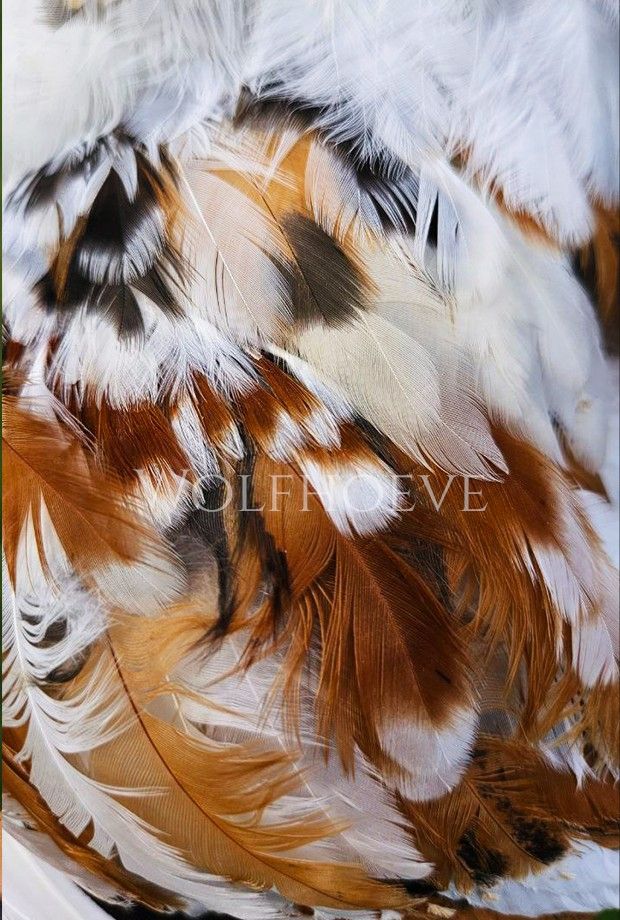
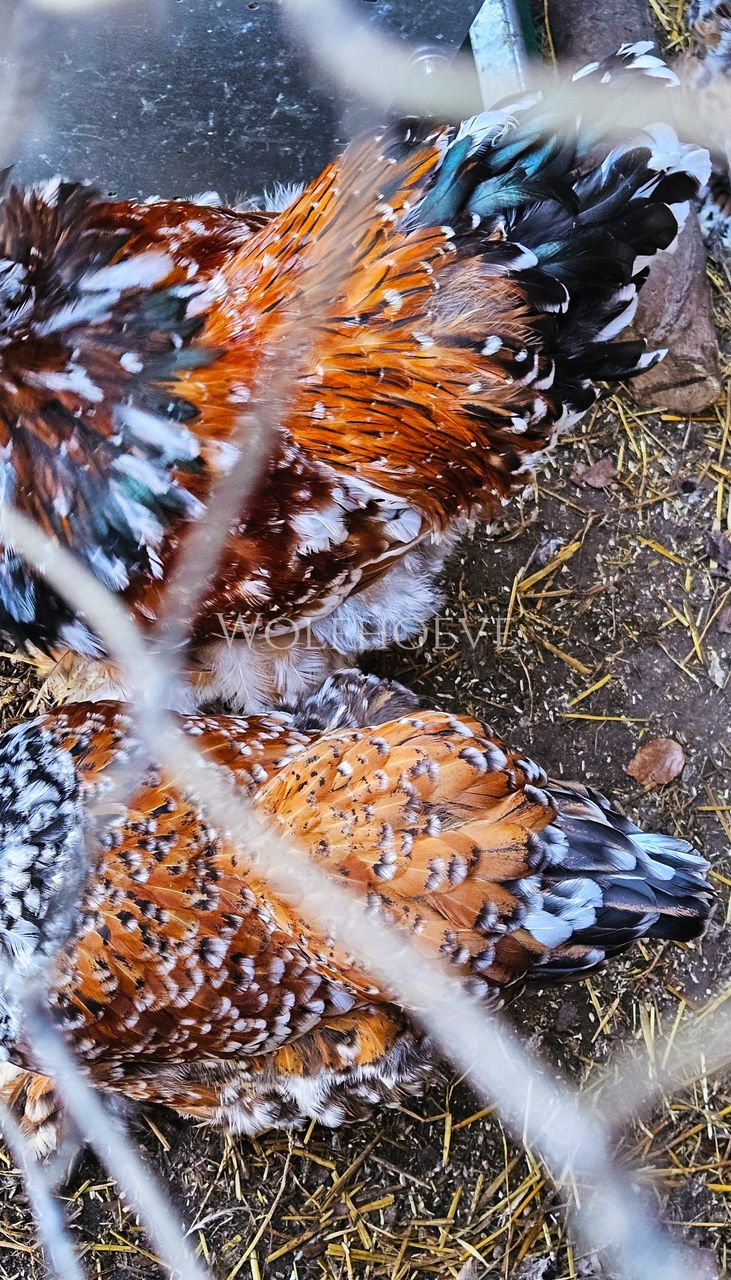
Tollbunt's genotype is eb/eb · Co/Co · Pg/Pg · Ml/Ml · mo/mo — a gold body with black feather edging and white tips, "laced and mottled combined":
| Gene | Genotype | What it contributes |
|---|---|---|
| Extension — brown | eb/eb | The gold ground colour (pheomelanin). |
| Columbian | Co/Co | Restricts and organises the black toward the feather edge, giving the laced/edged look. |
| Pattern & Melanotic | Pg/Pg, Ml/Ml | Supply and shape the black of the lacing. |
| Mottling | mo/mo | Tips each feather white.1 |
Tollbunt vs mille fleur vs porcelain
These three are the same idea — a gold, eb-based bird patterned with black by the Pattern and Melanotic genes and tipped white by mottling — separated by just one gene each. It is the clearest small lesson in how one locus changes a whole variety:
| Variety | Genotype | The difference |
|---|---|---|
| Tollbunt | eb · Co · Pg · Ml · mo | Columbian (Co) drives the black to the feather edge → lacing/edging. |
| Mille Fleur | eb · Db · Pg · Ml · mo | Dark Brown (Db) instead of Columbian → a richer ground and a black spangle rather than edging. |
| Porcelain | eb · Db · Pg · Ml · mo · lav | Mille fleur plus lavender — the whole thing softened to cream and grey. |
Co (Columbian) where mille fleur carries Db (Dark Brown). Columbian pushes the eumelanin outward into a clean lace; Dark Brown enriches the ground and leaves the black as a spangle. This is why some breeders caution against crossing mille fleur into a Tollbunt line — you would be mixing the two base modifiers rather than reinforcing one. See the pattern genes page for how these arrangements arise.
How it breeds
Like mille fleur, Tollbunt rests on the recessive mottling gene, so the white tips follow the usual recessive pattern — carried hidden in an outcross F1 and reappearing in about a quarter of the F2. And because the pattern is a stack of several genes brought to homozygous together, it is a multi-generation project to build or fix. You can plan those crosses in the Breeding Outcomes tool.
Tollbunt is also part of the wider mottling family — the same white-tipping gene that, on other bases, gives mottled, speckled, mille fleur and porcelain.
- The recessive mottling gene (
mo) as the shared basis of mottled, mille fleur, Tollbunt and related patterns: Somes RG Jr (1980) The mottling gene, the basis of six plumage color patterns in the domestic fowl. Poultry Science 59(7):1370–1374. Extension/pattern-gene framework: Smyth JR Jr (1990), in Crawford RD (ed.) Poultry Breeding and Genetics — see the Genetics Guide references. Genotypes shown match the Compare tool's standard data.