One thing worth saying first: which Brahma colours are "recognised" depends on the standard you are working to, and national standards differ. A colour accepted in one country may not be listed in another. The genetics, however, is the same everywhere — so this page is organised by what the genes do, not by any one country's list. For the official position in the Netherlands, see the Brahma Club Nederland listing on our links page.
Colour aside, every Brahma shares the same structural traits: heavily feathered shanks and feet, a pea comb, and a broad, deep body. The feathering on the legs comes from two dominant genes whose effects add together — a heavily "booted" bird like a Brahma carries both. Those traits are covered in chicken anatomy, and they are independent of whatever colour the bird happens to be.
Restricted patterns — black at the neck and tail
These are the classic Brahma looks. The Columbian gene pushes black out of the body and confines it to the hackle and tail, leaving the body a clean, pale ground colour. Light Brahma is this pattern on white; buff Columbian is the identical layout on a buff ground — the same gene, a different canvas.
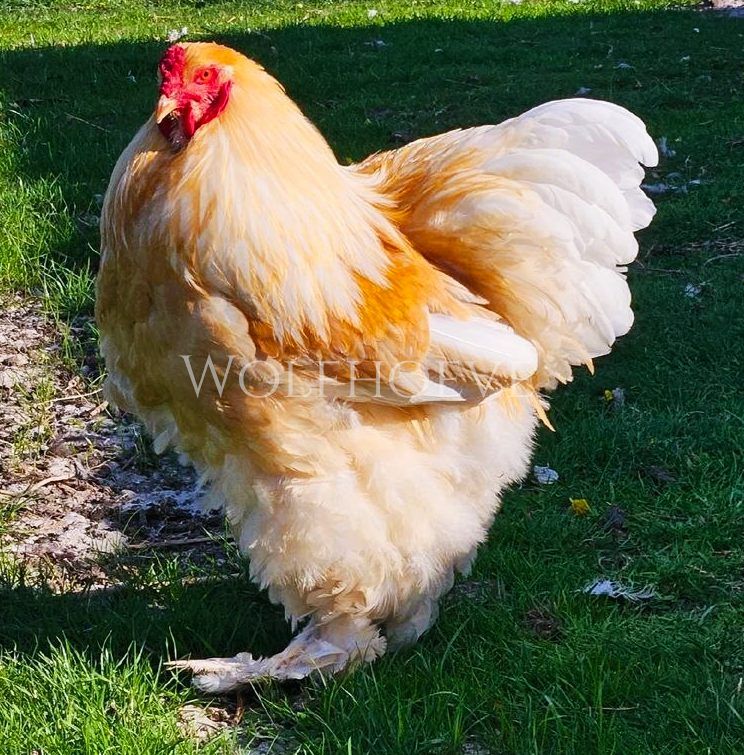
Often called "lemon pyle" — but it is not genetically pyle at all. Dominant white laid over a buff Columbian base.
Why it isn't true pyle →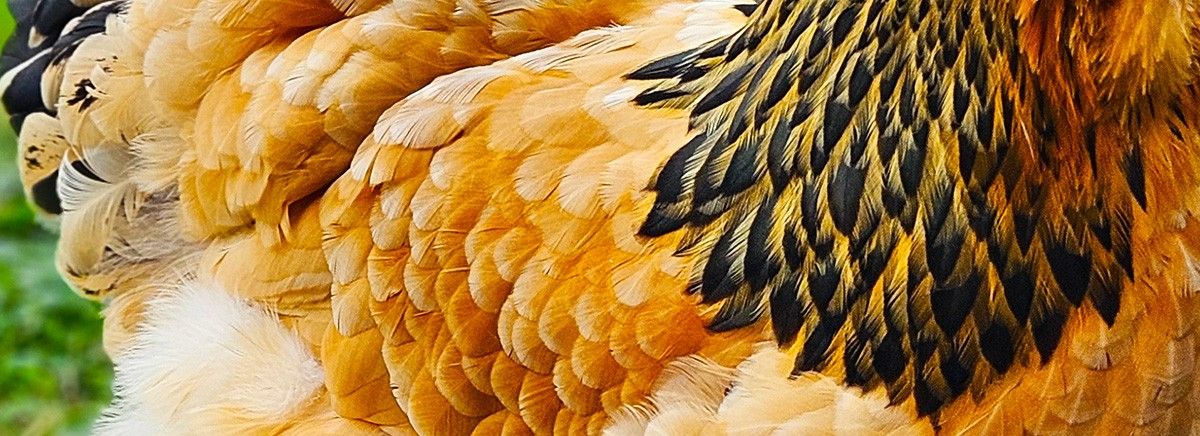
Black restricted to hackle and tail over a buff or white body. The Blue locus turns the same pattern into blue and splash Columbian.
Buff Columbian genetics →Solid colours
Where a restricted pattern confines black, a solid colour spreads one shade over the whole bird. Black, blue and splash are three genotypes of a single gene — which is why blue never breeds true, and why blue to blue gives roughly one black, two blue and one splash. Lavender reaches a similar soft grey by a different route: it is recessive, dilutes gold as well as black, and can hide invisibly in carriers for a generation.
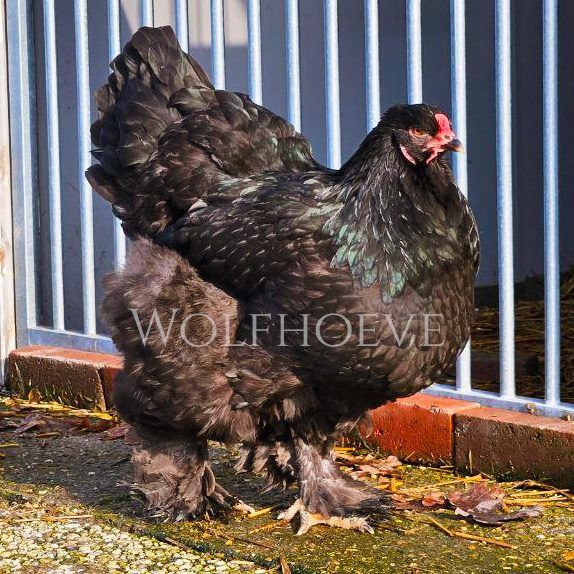
Solid black with a green sheen in good light. The base from which blue and splash are produced.
Blue, splash & black →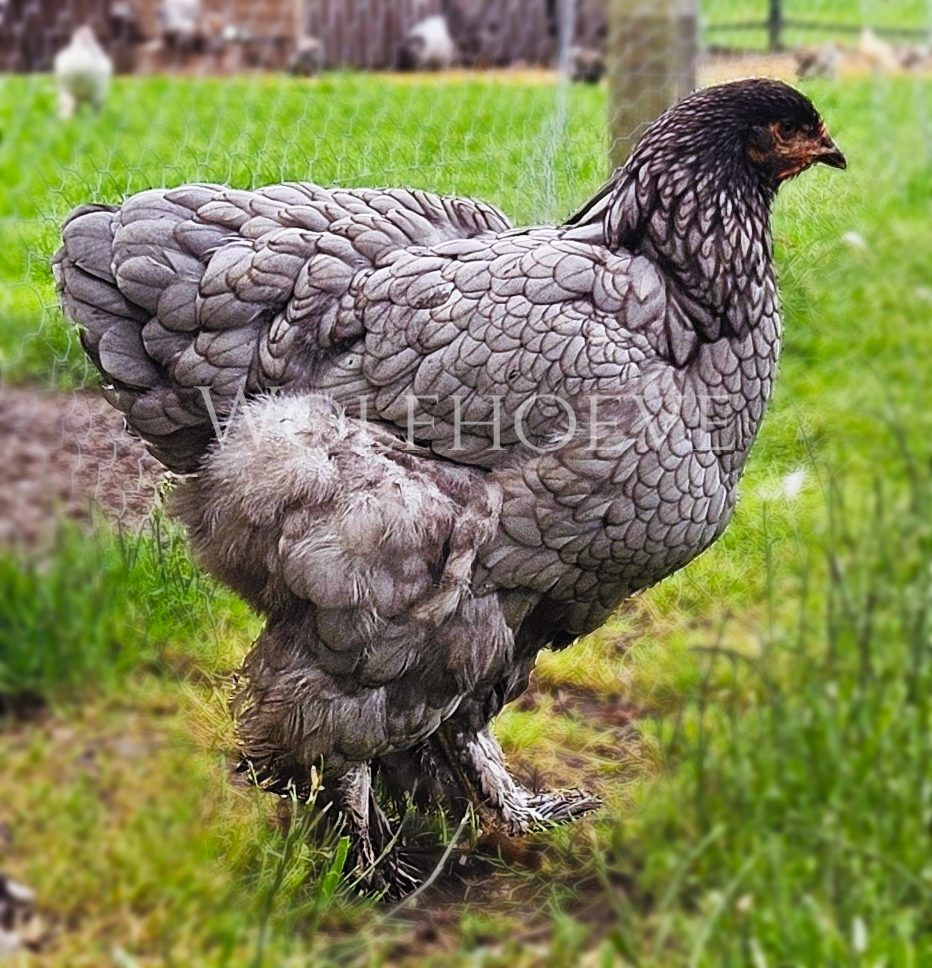
One copy of the Blue gene dilutes black to slate. Two copies give the pale, flecked splash instead.
Why blue never breeds true →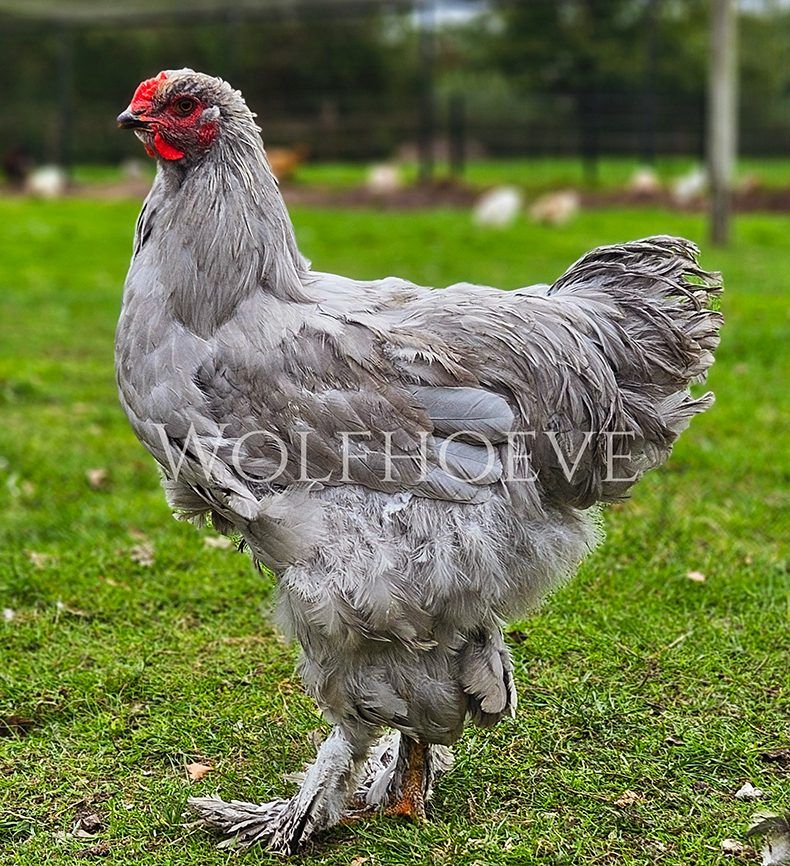
Also called self-blue. Recessive, and unlike blue it washes out the gold as well — so it can travel hidden.
Lavender genetics →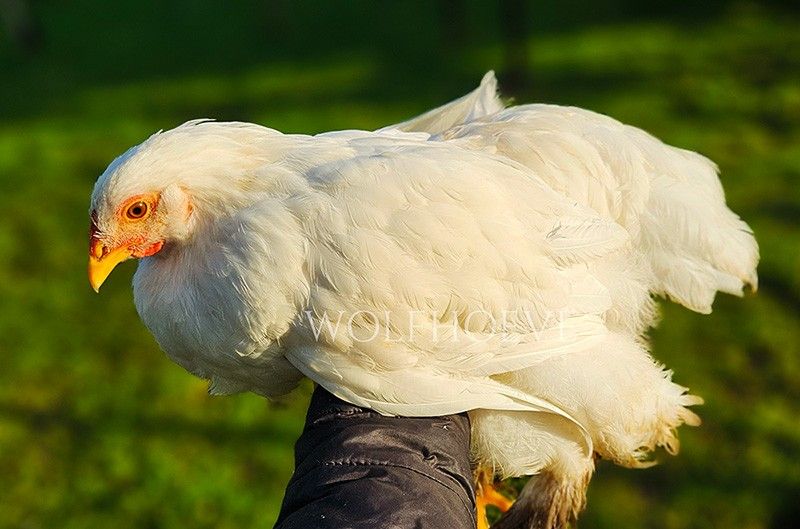
Two unrelated genes both produce a white bird by opposite routes, so two whites can throw coloured chicks.
Dominant vs recessive white →Gold-based colours and patterns
These build on a gold or brown base rather than restricting black to the ends of the bird. Partridge Brahmas carry double pencilling — concentric dark bands following the outline of each feather. Isabel is what happens when the recessive lavender gene lands on a gold partridge bird, softening gold to straw-fawn and black to grey. Salmon is the wheaten-based colour familiar from Faverolles.
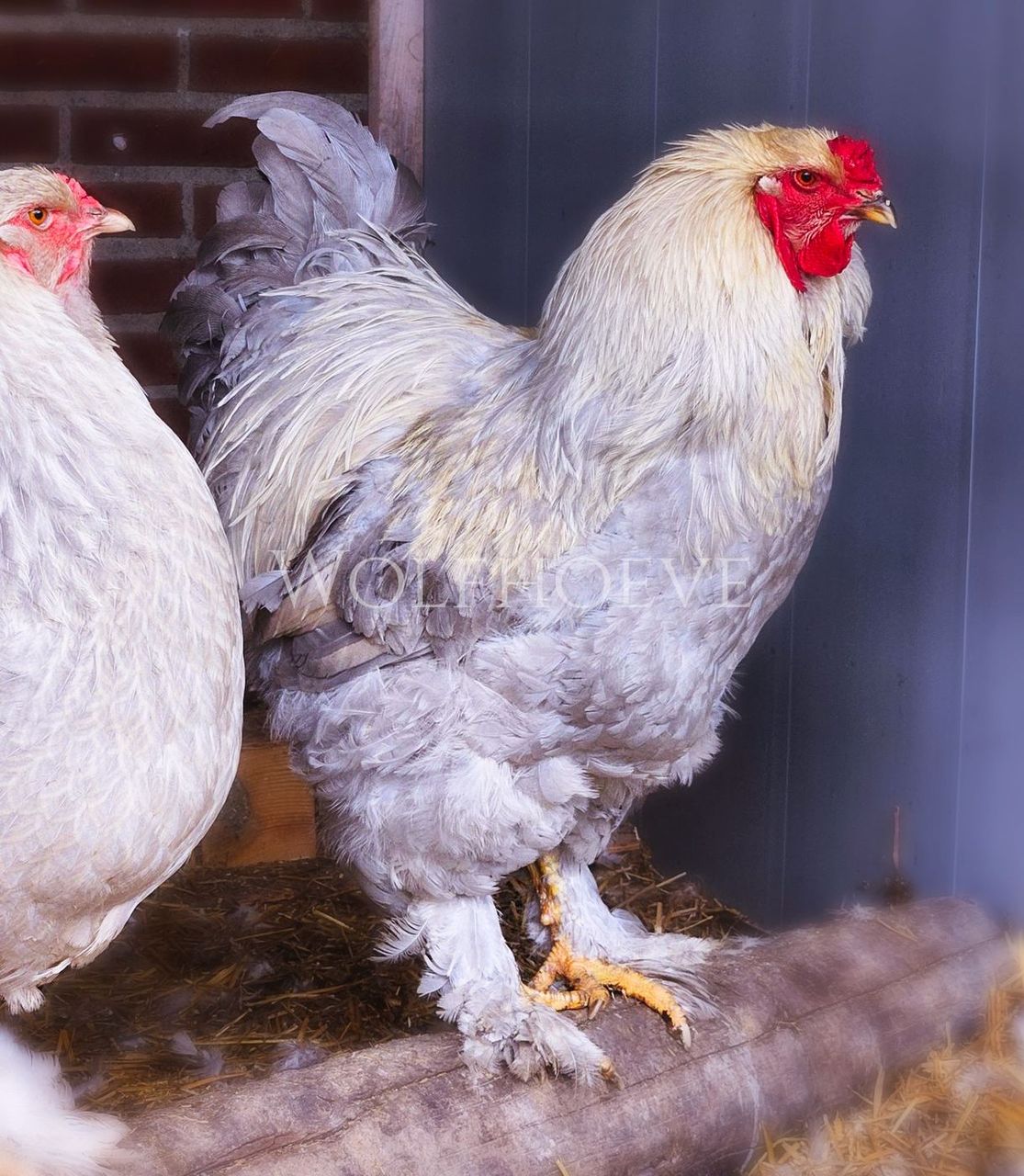
Lavender on a gold base. Straw-fawn where the gold would be, grey where the black would be.
Isabel genetics →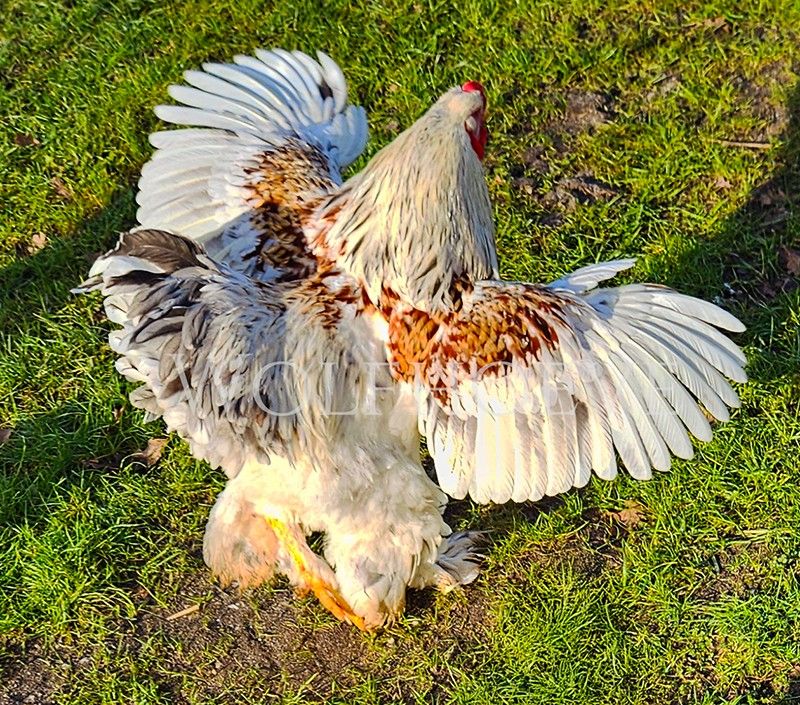
A wheaten base with red over silver. Rooster and hen look strikingly different from each other.
Salmon genetics →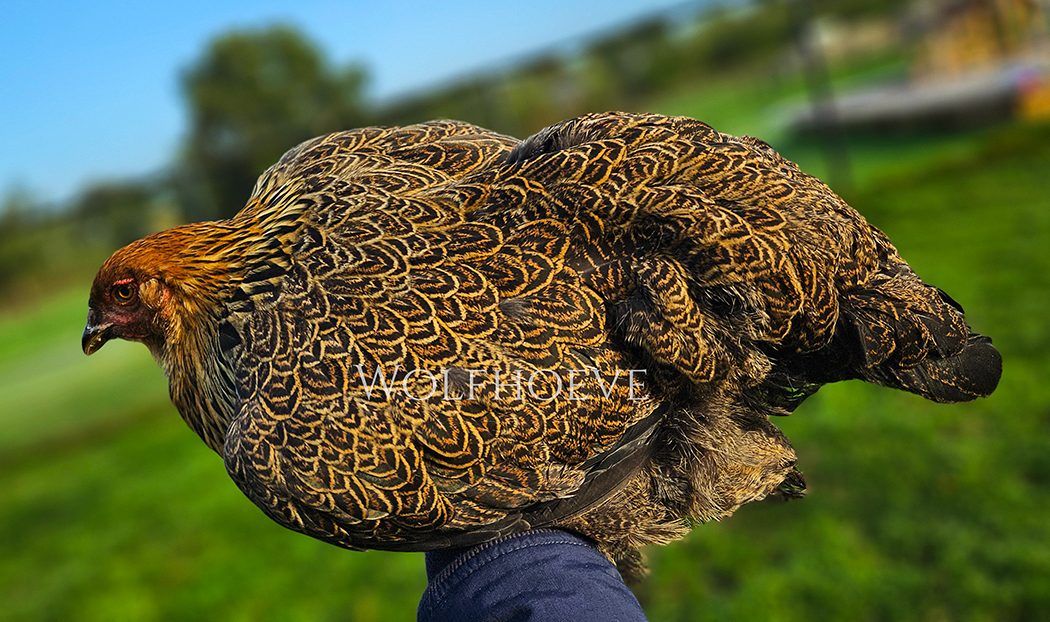
Concentric black bands following each feather's outline over a gold ground — the Pattern gene at work.
How pencilling is built →Tipped and laced patterns
Mottling tips each feather with white, and adds more white at every moult — so a mottled bird is not finished until its second adult moult. Layer mottling onto a laced gold bird and you get tollbunt, a tricolour of gold, black edging and white tips.
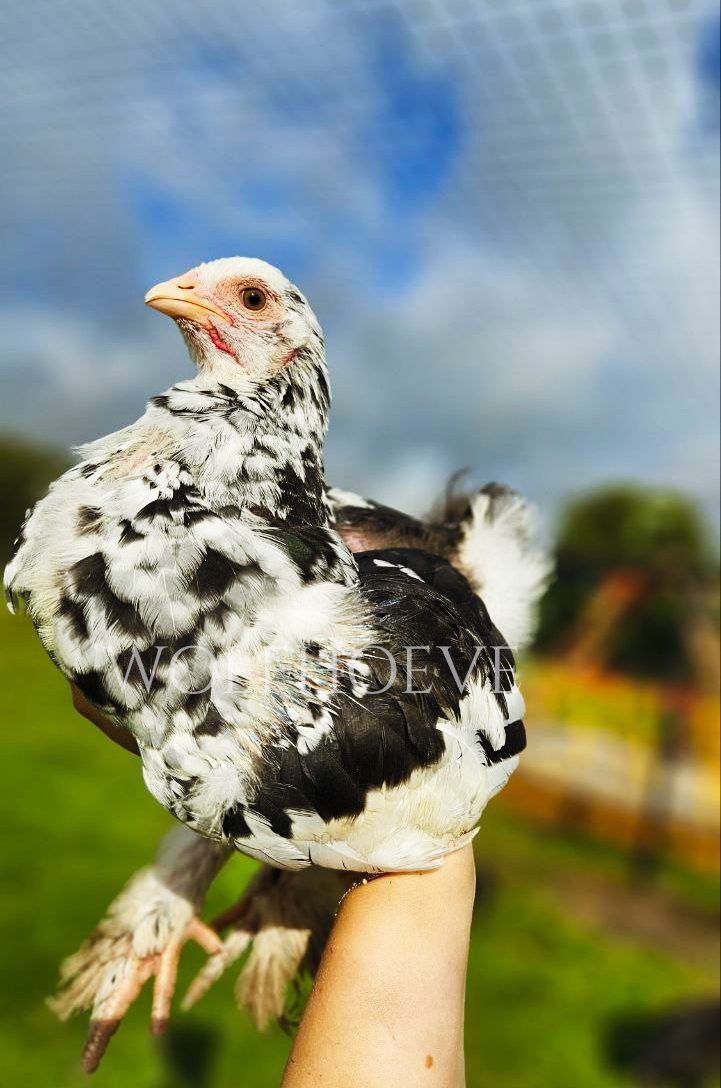
A recessive gene tips each feather white. Expect more white with every moult, not less.
Mottling genetics →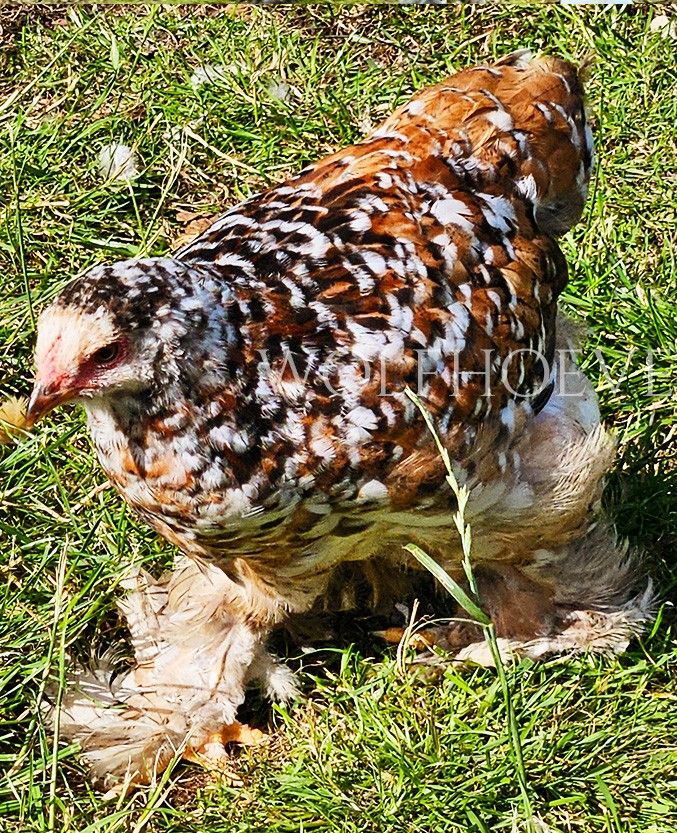
Gold, black lacing and white tips together — lacing and mottling stacked on one bird.
Tollbunt genetics →Common questions
What colour is my Brahma?
Start with where the black sits. Restricted to hackle and tail over a pale body? That is a Columbian pattern — Light on white, buff Columbian on buff. One even shade all over? A solid: black, blue, white, or lavender if the gold has washed out too. Repeating markings within each feather? A pattern such as partridge, double-pencilled, mottled or tollbunt. Bear in mind that some colours only separate at the first juvenile moult, so a chick can be hard to call. The photo identifier will show which varieties a bird's plumage matches.
What colour will my Brahma chicks be?
That depends on both parents' genotypes, not on how they look. Lavender is recessive and skips a generation in carriers; mottling keeps developing over successive moults; blue never breeds true. Enter the two parents into the Breeding Outcomes calculator and it will give the expected colours and their ratios, including the F2 generation.
Can a Brahma be a true Pyle?
No. True Pyle is built on the wildtype Extension allele (e+), and no recognised Brahma colour pattern uses that base — the Light and Dark patterns were developed from Asiatic partridge stock built on eb. What hobbyists call a "pyle" or "lemon pyle" Brahma is genetically Buff White Columbian: dominant white over a buff Columbian base. It looks the part, but it breeds differently.
Why do two Brahmas with the same colour name look different?
Because a colour name describes an appearance, not a genotype. The same look can be reached by more than one genetic route, and the two routes breed differently — which is exactly why "it looks right" is not enough when planning a pairing. The Compare Standards tool puts two varieties side by side and shows where their genotypes actually differ.